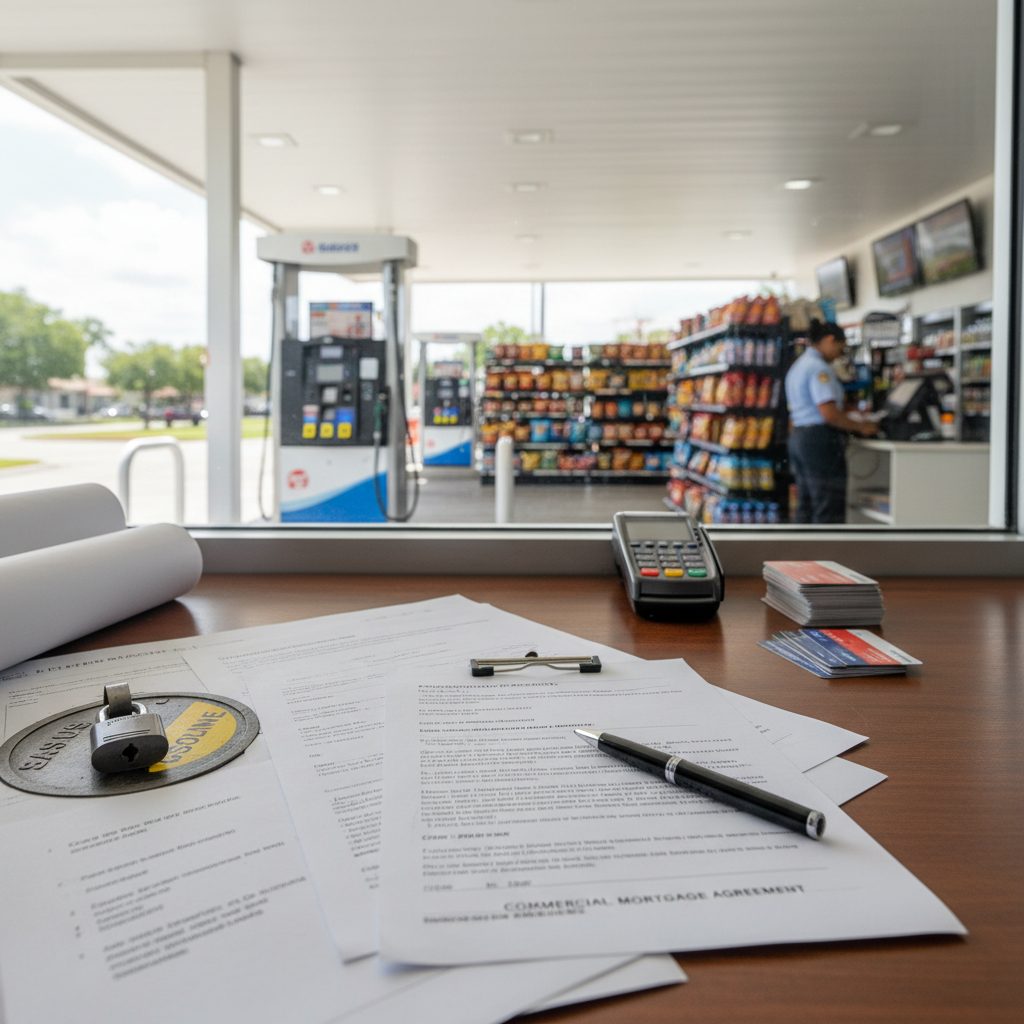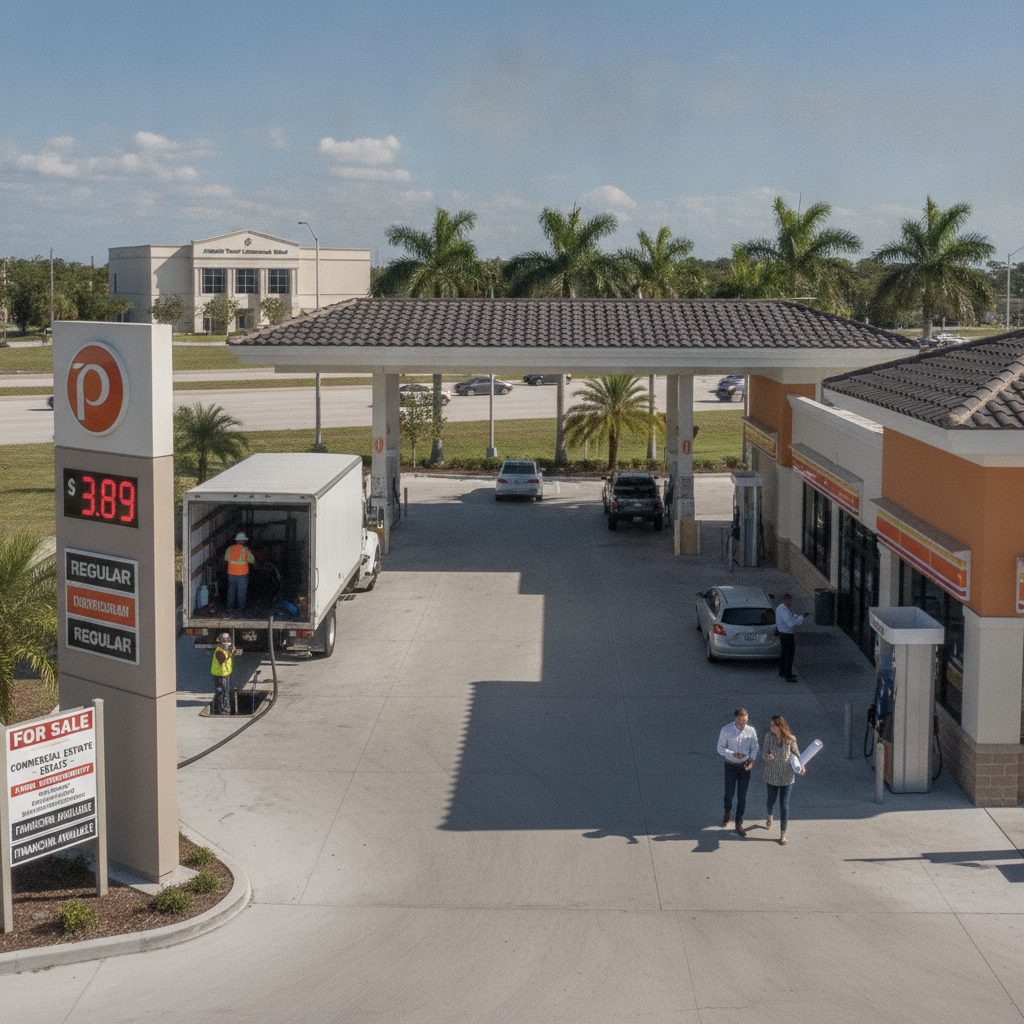
Financing is the single biggest constraint on Florida gas station acquisitions. Lenders treat fuel retail as a specialty asset with environmental exposure, so terms, documentation, and timelines look different from a standard commercial real estate loan.
This guide covers the realistic financing options for buying a gas station in Florida — SBA, conventional commercial, seller notes, equipment and fuel-supplier capital, and equity partners — plus what each lender needs to say yes. Pair it with our buyer resources for the full acquisition path.
SBA 7(a) and 504: The Default Path
For owner-operators, SBA lending is usually the best-priced capital available. The 7(a) program can finance real estate, business goodwill, equipment, and working capital in one loan, commonly at 10 to 15 percent down for an experienced buyer, amortized up to 25 years when real estate dominates the collateral. The 504 program pairs a bank loan with a CDC debenture for fixed-rate real estate financing.
SBA underwriting for fuel sites requires a Phase I environmental site assessment, sometimes a Phase II, a business valuation from an approved appraiser, three years of seller tax returns, and proof of industry experience or a management plan. Missing experience is the most common decline reason — buyers solve it by hiring a proven manager or retaining the seller for a transition period.
Conventional, Seller, and Supplier Capital
Conventional commercial lenders will finance Florida stations, typically at 25 to 35 percent down with five- to ten-year terms and shorter amortization. They move faster than SBA and suit investors buying NNN-leased stations where the tenant carries operations, but they underwrite the environmental report conservatively.
Seller financing bridges valuation gaps and signals confidence in the numbers. A 10 to 20 percent seller note, subordinated where the senior lender allows, is common in Florida dealer-to-dealer deals. Fuel suppliers add another layer: branded incentive and image funding can cover canopy, dispenser, and signage costs, though it comes with volume commitments and a repayment clawback if you debrand early.
Getting to a Fundable File
Lenders fund files, not intentions. Before you make offers, assemble a personal financial statement, two to three years of personal returns, proof of liquidity for down payment plus six months of operating reserve, a resume showing retail or fuel experience, and an entity ready to be formed.
On the deal side, expect to produce seller P&Ls and returns, fuel volume reports from the supplier, the current supply agreement, tank registration and compliance records, and the lease if real estate is not included. Deals die on missing documents far more often than on price. We help buyers pre-package this before an offer goes out — see buyer and seller representation.
Frequently Asked Questions
Speak With a Florida Gas Station Specialist
Request a confidential consultation or off-market opportunities and pricing through our contact page, or call +1-305-518-1545. The Gas Station Group is headquartered at 8603 S Dixie Hwy, Miami, FL 33143. Principal: Bobby Berrido.
Continue Reading