Hiring the wrong broker to sell or acquire a Florida gas station is one of the most expensive mistakes an operator or investor can make. The difference between a specialist fuel retail broker and a generalist business broker is not a matter of degree — it is a matter of domain knowledge, buyer relationships, and transactional literacy that directly affects sale price, deal structure, and probability of close.
The Gas Station Group is a Florida-focused fuel retail practice, not a generalist commercial real estate or business brokerage shop. That distinction matters enormously when the asset being transacted involves UST compliance under FDEP regulations, supply agreement assignments, fuel margin underwriting, and an institutional buyer pool that does not read LoopNet listings.
Contract Literacy: Supply Agreements, PMPA, and Lease Structures
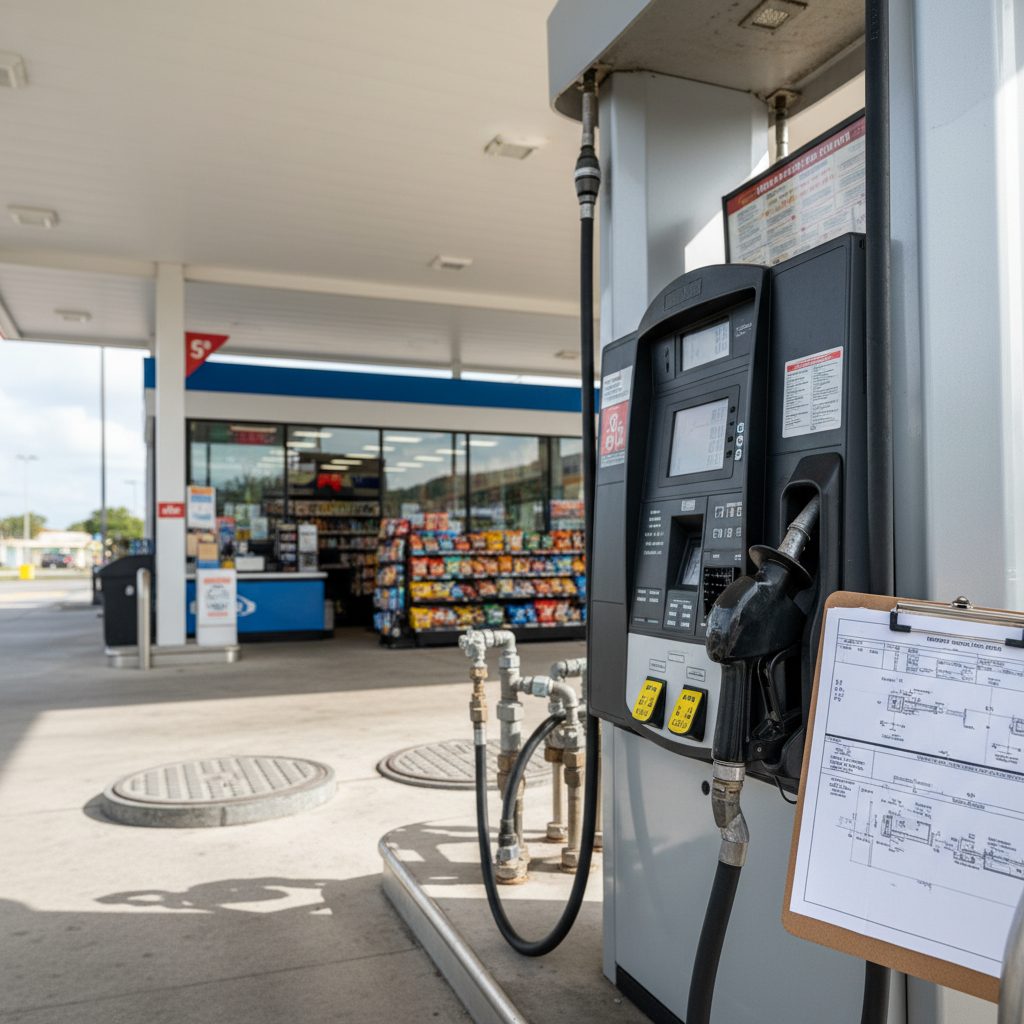
A gas station transaction involves a layered set of contracts that most generalist business brokers have never encountered: a supply agreement or dealer franchise agreement governed by the federal Petroleum Marketing Practices Act (PMPA), potentially a separate real estate lease or ground lease, an equipment lease or loan for dispensers and point-of-sale systems, and various vendor agreements for ATM, lottery, and car wash operations. Each of these has assignment provisions, change-of-control clauses, and termination triggers that must be navigated in sequence.
A specialist broker reads supply agreement exhibits the way an attorney reads loan documents — looking for volume covenants, image loan balances, non-compete clauses, and territory restrictions that affect value. A generalist business broker typically reviews a P&L and a lease abstract and moves to market. The difference in preparation alone can result in a deal collapsing in due diligence rather than closing — a scenario that costs the seller months of time, lost confidentiality, and potential employee or supplier disruption.
UST and FDEP Knowledge: The Environmental Dimension
Florida has one of the most active underground storage tank (UST) regulatory environments in the United States, administered by the Florida Department of Environmental Protection. Every gas station has one or more USTs, and the regulatory status of those tanks — active cleanup sites, Petroleum Brownfield designations, Early Detection Incentive program closures, pre-1994 tank replacement compliance — is a critical underwriting factor for every serious buyer.
Generalist business brokers routinely misprice or misrepresent FDEP contamination status because they do not know what to look for or how to interpret a Site Assessment Report. A specialist knows how to read a FDEP OCULUS database entry, distinguish between a site in active remediation versus one with a No Further Action letter, and structure a transaction with appropriate environmental escrows, indemnifications, or Brownfield site incentives. This knowledge protects both buyer and seller from post-closing liability that can dwarf the purchase price. Florida gas station buyers and sellers deserve representation from brokers who understand these risks at a granular level.
Institutional Buyer Access and Real Comp Data
The most qualified buyers for Florida gas stations — regional operators expanding along I-95 or the Turnpike, family office investors targeting NNN fuel retail, private equity-backed c-store platforms — do not respond to generic business-for-sale listings. They transact through trusted broker relationships built over years of deal flow. A specialist fuel retail broker maintains active relationships with these buyers, knows their acquisition criteria, and can run a controlled, confidential process that maximizes competitive tension without unnecessary market exposure.
Comp data is similarly specialized. Sale comps for gas stations are priced on a multiple of EBITDA adjusted for fuel volume, real estate component, and supply agreement quality — not cap rate alone or revenue multiple. A generalist broker pulling data from CoStar or business-sale aggregators will have a materially incomplete picture of where Florida fuel retail has actually traded. The Gas Station Group tracks closed transactions across the state and uses proprietary comp data to price assets correctly from day one.
Why Generalist Brokers Leave Money on the Table
The cumulative effect of weaker contract literacy, limited environmental knowledge, a shallower buyer pool, and inferior comp data is a lower sale price and a higher deal failure rate. A generalist business broker may price a site based on a 3x SDE multiple derived from restaurant or retail comparables, when a properly positioned Florida fuel retail asset — with clean FDEP status, a strong supply agreement, and above-market gallonage — should trade at 5–7x adjusted EBITDA or above. That gap, on a $1M site, is $200,000–$400,000 of value left on the table.
Beyond pricing, generalists often fail to structure the deal correctly: they may not know to carve out the real estate from the operating business for a simultaneous sale-leaseback, fail to sequence the supply agreement assignment before the real estate closing, or overlook the fuel liability indemnification language that protects a seller post-close. Selling a Florida gas station through a specialist who has closed dozens of these transactions in this state is not a luxury — it is the only way to protect the asset's full value.
What a Specialized Gas Station Broker Actually Handles
Titles matter less than scope of work. The practical difference between a specialist and a generalist shows up in the specific tasks each one performs on a live fuel-retail file. The list below describes the work itself, so an owner can compare it against what any prospective broker proposes to do.
- Separating value: dividing the price into real estate, operating business and fuel economics rather than quoting a single blended figure. Background: how real estate value and business value differ.
- Normalized earnings: reviewing the books for owner compensation, personal expenses, one-time items and other add-backs a buyer or lender is likely to accept or reject. Detail: recasting earnings and defensible add-backs.
- Fuel performance: reading monthly gallons, retained margin, credit-card cost and inside-store contribution together, since fuel volume alone explains little about profitability.
- Equipment ownership: identifying which dispensers, tanks, canopy, POS, coolers, car wash and ATM assets the seller owns outright versus what is leased, financed or supplier-owned.
- Supply and branding: recognizing supply-agreement terms, remaining commitments, image or incentive money subject to repayment, and where a supplier consent or new dealer application may be required.
- Environmental and tank records: organizing registration, testing, inspection and remediation documents so buyers and their consultants work from the same file. Related: tank issues in a station sale.
- Buyer matching: positioning the property for the buyer types it realistically fits, rather than marketing every station to the same list. See the buyer types active in Florida.
- Buyer qualification: reviewing proof of funds, financing capacity, operating experience and licensing ability before confidential information is released.
- Controlled disclosure: staging what is shared, when, and under what agreement. Marketing discretion is covered in the confidential sale process, and staff communication in keeping a sale private from employees.
- Offer comparison: setting price against contingencies, deposit terms, diligence length, financing and the practical ability of each buyer to close. A cash number is not automatically the strongest: comparing a cash offer to a financed one.
- Diligence coordination: keeping the buyer, lender, attorneys, environmental consultant, supplier or distributor and closing agent working from one schedule and one document set. Starting point: the documents buyers request.
- Deadline and issue management: tracking contractual dates and working through findings that surface mid-deal, which is where many transactions come apart. See where deals break down by stage.
- Closing and handoff: sequencing the legal transfer alongside the operational transition of licenses, permits, accounts, fuel and inventory. Detail: closing day and the operational handoff.
Two related seller decisions sit alongside this scope of work: how an asking price is supported, discussed in setting a supportable asking price, and how sale proceeds are allocated and taxed, discussed in purchase-price allocation and seller net proceeds and exchange planning when selling.
What Specialization Does Not Promise
Specialized representation is about scope, preparation and coordination — not outcomes. No broker, specialist or generalist, can promise a particular price, a closing date, or that a transaction will close at all. Buyer behavior, lender decisions, environmental findings, supplier consent and market conditions are outside any broker's control. Some sellers reasonably choose to run a sale themselves; that trade-off is set out in selling without a broker.
Brokerage guidance is also not legal, tax, accounting, environmental or lending advice. Contract language, entity and title questions, tax allocation, financial statements, contamination assessments and loan underwriting belong to the seller's attorney, CPA, environmental consultant and lender. Bobby Berrido, CCIM, CMAA coordinates that team and keeps the transaction moving; he does not substitute for it.
Frequently Asked Questions
Speak With a Florida Gas Station Specialist
Request a confidential consultation or off-market opportunities and pricing through our contact page, or call +1-305-518-1545. The Gas Station Group is headquartered at 8603 S Dixie Hwy, Miami, FL 33143. Principal: Bobby Berrido.
Continue Reading