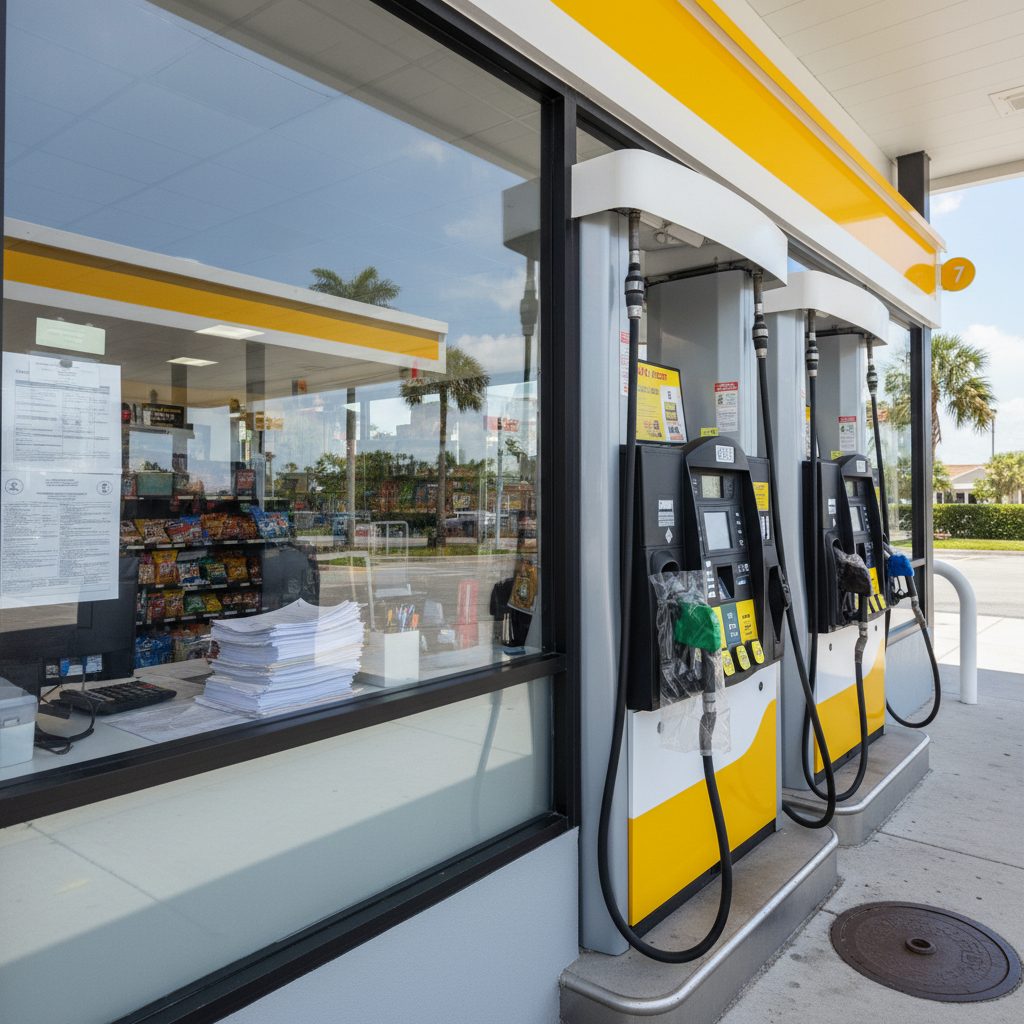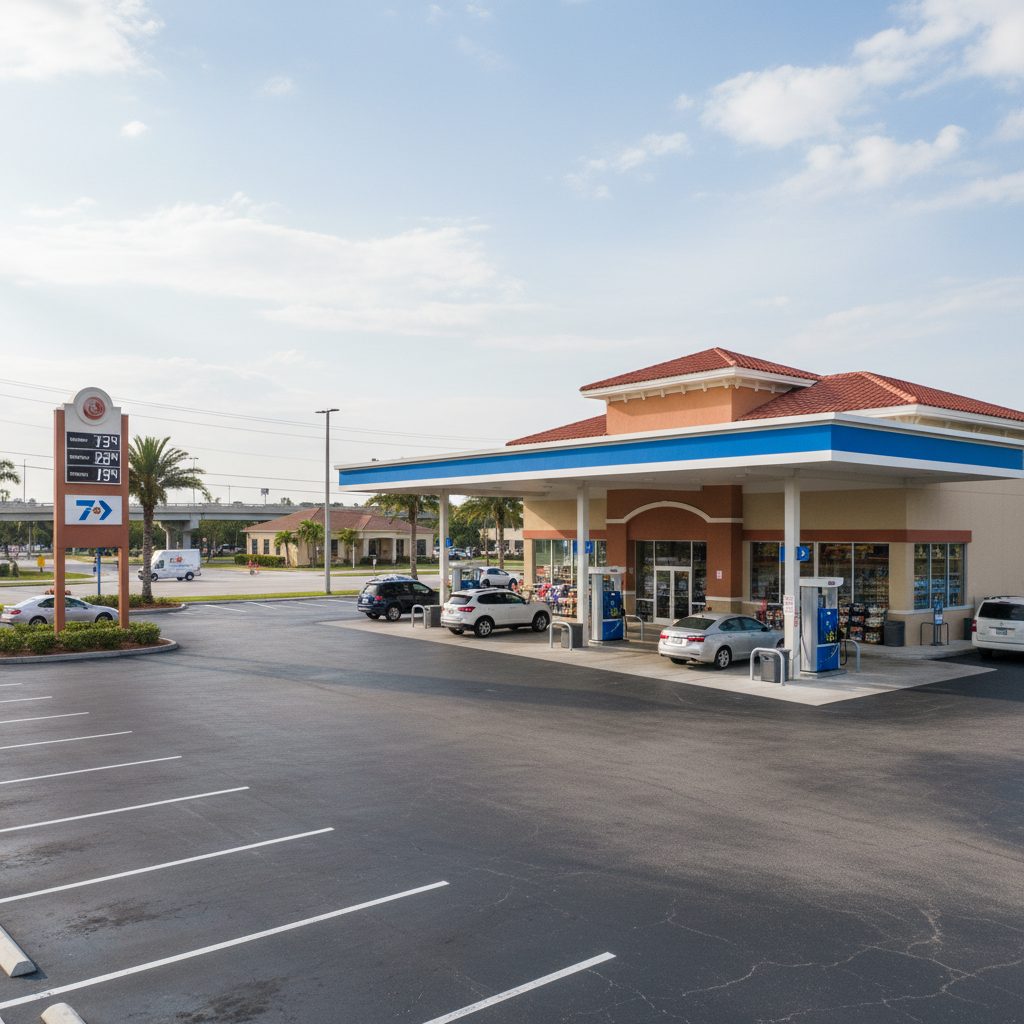
The SBA 7(a) program remains the most accessible acquisition financing vehicle for independent operators purchasing Florida gas stations, enabling qualified buyers to acquire fuel-retail businesses with as little as 10–15% down on combined real-estate and business-value transactions. For a market where all-in acquisition costs on a mid-tier Florida station regularly exceed $2 million, the leverage profile of a 7(a) loan meaningfully lowers the equity barrier to entry.
Navigating SBA fuel-retail lending requires understanding how lenders treat environmental exposure, how fuel-business valuations interact with the 7(a) loan ceiling, and which Florida lenders have active SBA fuel-retail portfolios. Buyers and sellers of Florida gas stations benefit from working with a broker that understands how deal structure affects SBA eligibility from the initial letter of intent.
Eligibility and Down Payment Requirements
To qualify for an SBA 7(a) loan for a Florida gas station acquisition, the borrower must demonstrate U.S. citizenship or lawful permanent residency, a minimum two-year operating or industry experience history, acceptable personal credit — generally 680-plus FICO — and a demonstrated ability to service debt from projected business cash flow. The business itself must qualify as a small business under SBA size standards, which for fuel dealers is measured by annual receipts; most independent and regional dealer operations comfortably qualify.
Down payment requirements typically land at 10% for acquisition of a going-concern business with real estate included in the transaction, and 15–20% when the real estate is excluded or the loan is business-only. Florida gas station transactions that bundle land, improvements, equipment, and goodwill into a single 7(a) loan achieve the most favorable leverage; parceling these components into separate financings often triggers higher equity requirements and adds closing complexity.
Environmental Requirements and FDEP Due Diligence
Environmental due diligence is where SBA fuel-retail loans most commonly stall. Lenders participating in the SBA 7(a) program are required to conduct Phase I Environmental Site Assessments on all fuel-retail collateral, and any recognized environmental condition (REC) identified in the Phase I triggers a Phase II subsurface investigation. Florida's legacy of aging UST infrastructure — particularly tanks installed pre-1998 without fiberglass lining — means RECs are common, and Phase II findings can range from minor soil impact to open FDEP discharge cases.
An open FDEP discharge case is not automatically a loan killer, but it requires lender approval, a remediation cost estimate from a licensed Florida PRCP, and often a remediation escrow funded at closing. SBA lenders with active fuel-retail portfolios — including certain Florida-based community banks and national SBA preferred lenders with energy verticals — are experienced with FDEP case structures and IPTF eligibility. Working with an environmental counsel familiar with the FDEP Early Detection Incentive program can significantly reduce the capital reserve required at closing.
Business Valuation and the Loan Ceiling Gap
The SBA 7(a) maximum loan amount of $5 million creates a structural constraint for Florida gas stations in high-value markets — particularly Miami-Dade, Broward, and Palm Beach counties where land alone can represent $1.5–2.5 million of total acquisition cost. When the appraised real-estate value plus business goodwill and equipment value exceeds the $5 million ceiling, buyers must bridge the gap with equity, seller financing, or a conventional first-lien with a 7(a) second — a structure some preferred lenders will accommodate.
Business valuations for SBA purposes are conducted by SBA-approved business appraisers and rely primarily on a multiple of Seller's Discretionary Earnings (SDE) or EBITDA, adjusted for fuel volume, inside sales, and lease terms. Florida stations with lottery commission income, attached car washes, or strong food-service programs command higher SDE multiples — typically 2.5x–4.0x SDE — which can strain the loan ceiling in premium markets. Accurate add-back documentation from the seller is critical to maximizing appraised business value within SBA guidelines.
Timeline and Preferred SBA Lenders for Fuel Retail
A fully documented SBA 7(a) application for a Florida gas station — including environmental reports, business valuation, three years of business tax returns, and real-estate appraisal — typically closes in 60–90 days from completed application submission to a preferred lender (PLP). PLP status allows the lender to approve loans internally without SBA underwriting review, materially accelerating timelines. Non-PLP submissions routed through the SBA district office add 30–45 days and are generally avoided for time-sensitive acquisition contracts.
Florida lenders with demonstrated SBA fuel-retail experience include regional banks with SBA energy desks, credit unions that have pursued SBA PLP status, and national non-bank SBA lenders with dedicated small-business acquisition platforms. The Gas Station Group maintains relationships with lenders active in Florida fuel-retail financing and can facilitate introductions as part of the acquisition advisory process. Contact our team to discuss financing structure before going under contract — loan eligibility issues discovered post-LOI are the most common deal-killers in Florida gas station transactions.
Frequently Asked Questions
Speak With a Florida Gas Station Specialist
Request a confidential consultation or off-market opportunities and pricing through our contact page, or call +1-305-518-1545. The Gas Station Group is headquartered at 8603 S Dixie Hwy, Miami, FL 33143. Principal: Bobby Berrido.
Continue Reading