Buyers searching for gas stations for sale in Florida with franchise options are usually looking for two things at once: fuel supply under a recognized major-oil brand, and a c-store or QSR franchise that lifts inside sales. Those two decisions are separate contracts with separate economics, and the way you stack them determines your margins for the next decade.
This guide explains which franchise and brand structures are actually available on Florida stations that trade, what each one requires of a new owner, and how to evaluate the deal before you sign. Start with our Florida gas station broker overview if you want the transaction process end to end.
Fuel Brand Franchise vs. C-Store Franchise
A fuel brand agreement (Shell, BP, Chevron, Mobil, Marathon, Sunoco, Citgo, Valero) is a supply and trademark license, usually signed through a wholesale distributor or jobber rather than the oil company directly. It sets your gallon pricing, image standards, credit-card processing, and term — typically five to ten years with an image investment schedule attached.
A c-store or foodservice franchise (7-Eleven, Circle K licensing programs, Subway, Dunkin', Popeyes, Krispy Krunchy Chicken) is a separate agreement covering the inside business. Royalty is charged on inside sales, not gallons, and the franchisor approves the site, the build-out, and often the operator personally. Many Florida buyers pair an unbranded or regional fuel supply with a strong food franchise because inside margin outperforms fuel margin.
What Franchise Options Actually Appear on Florida Listings
In practice, Florida stations come to market in four franchise configurations: major-branded fuel with a proprietary c-store, major-branded fuel with a national QSR co-tenant, dealer-owned unbranded fuel with a chicken or pizza program, and full corporate-franchise stores where the buyer must be approved by the franchisor before closing.
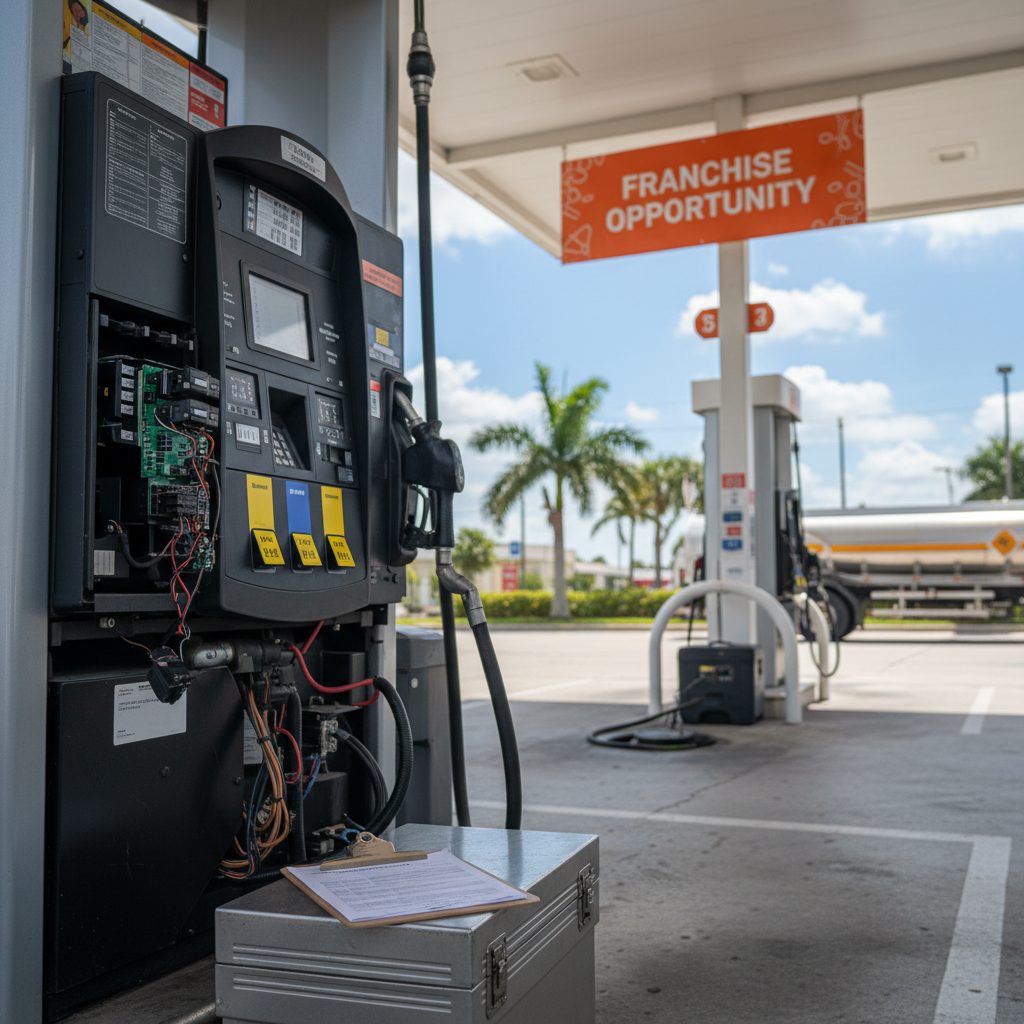
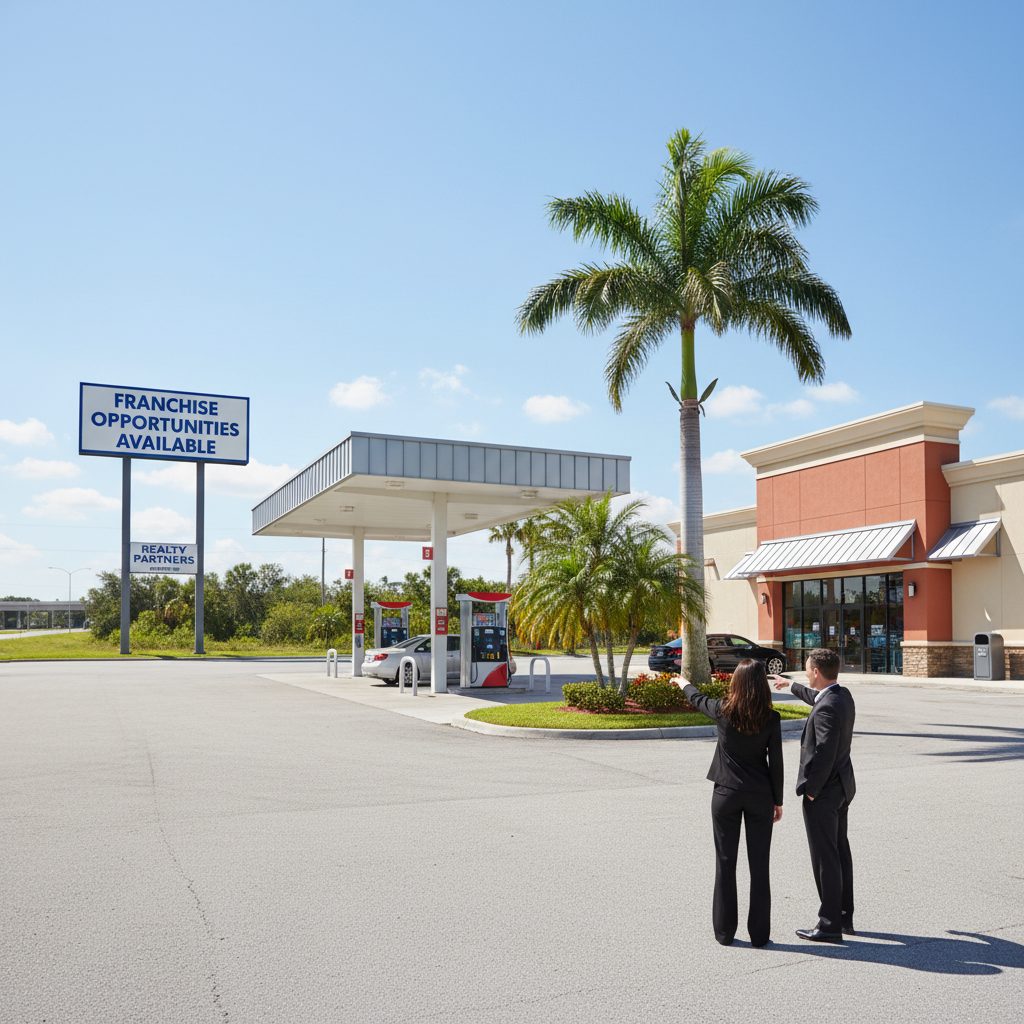
The fourth category is where deals fail. Franchisor approval adds four to twelve weeks and can require net-worth minimums, liquidity thresholds, and completion of a training program. If a listing is advertised as a franchise opportunity, ask for the current franchise agreement, the transfer fee, the remaining term, and any deferred remodel obligations before you spend money on diligence.
How to Underwrite a Franchised Station
Model the station three ways: as-is with the franchise in place, as-is with the franchise removed at expiration, and converted to a different brand. If value collapses in scenarios two and three, you are buying the contract rather than the real estate — which is fine, as long as the price reflects it.
Watch for image loans and remodel commitments. A branded incentive advanced to the seller often has an unamortized balance that becomes the buyer's obligation or a payback at transfer. Confirm the balance in writing from the supplier, and compare that figure against what a conversion would cost. Our fuel supply agreement advisory work exists specifically for this analysis.
Frequently Asked Questions
Speak With a Florida Gas Station Specialist
Request a confidential consultation or off-market opportunities and pricing through our contact page, or call +1-305-518-1545. The Gas Station Group is headquartered at 8603 S Dixie Hwy, Miami, FL 33143. Principal: Bobby Berrido.
Continue Reading