Evaluating a gas station business for sale in Florida means testing four things independently: the fuel business, the store business, the real estate, and the liabilities buried in contracts and tanks. Strong performance in one can mask a fatal problem in another.
This guide gives you a structured evaluation sequence you can run before spending money on formal diligence, so you can eliminate weak deals quickly. See our due diligence checklist for the formal phase.
Step One: Verify the Revenue Engine
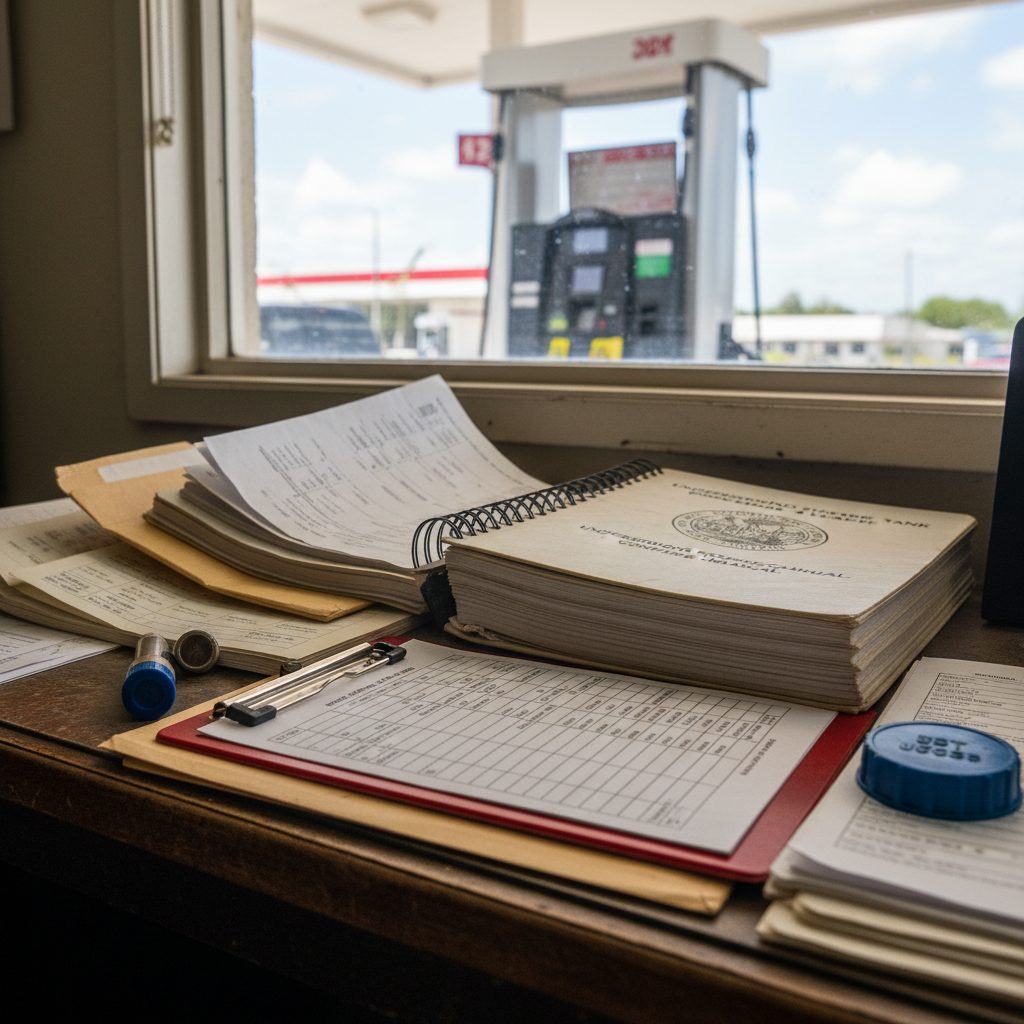
Ask for twenty-four months of fuel volume from the supplier, not the seller's spreadsheet. Look at trend, seasonality, and whether volume held after any nearby competitor opened. Then request POS reports by department for inside sales, and compare merchandise gross margin against the 25 to 32 percent norm — an outlier in either direction signals either a data problem or an unusual mix.
Reconcile both against filed tax returns and sales tax filings. Any gap between claimed and filed revenue is not upside; it is unverifiable income that no lender will finance and no future buyer will pay for.
Step Two: Read the Contracts That Bind You
Three documents control your economics: the fuel supply agreement, the lease if real estate is not included, and any franchise agreement. Note the term remaining, renewal rights, minimum volume commitments, cents-per-gallon differential, image and remodel obligations, and the unamortized incentive balance.
A station with excellent numbers and eighteen months left on its lease is a different asset than the same station with a fifteen-year term. Value the contract, not just the cash flow. Our fuel supply agreement advisory reviews these terms line by line.
Step Three: Price the Physical and Environmental Risk
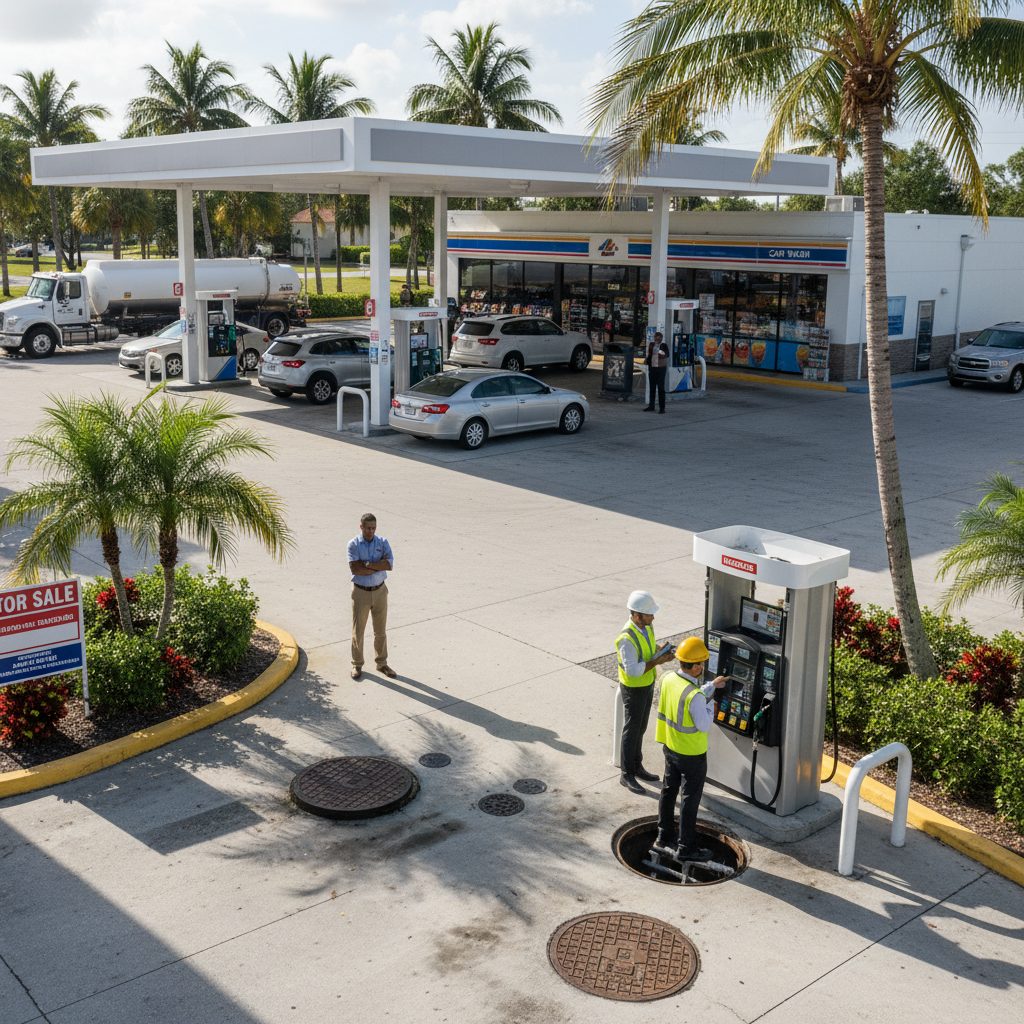
Get tank age, construction, and material, leak detection method, last tightness and cathodic protection tests, and the site's compliance and discharge history from FDEP and the delegated county program. Then look at hard assets: canopy condition, dispenser generation, EMV compliance, coolers, roof, and pavement.
Translate each item into a capital number and a date. A station needing $250,000 of dispensers and canopy work in year two is not the same purchase price as one that does not, no matter what the pro forma says.
Frequently Asked Questions
Speak With a Florida Gas Station Specialist
Request a confidential consultation or off-market opportunities and pricing through our contact page, or call +1-305-518-1545. The Gas Station Group is headquartered at 8603 S Dixie Hwy, Miami, FL 33143. Principal: Bobby Berrido.
Continue Reading