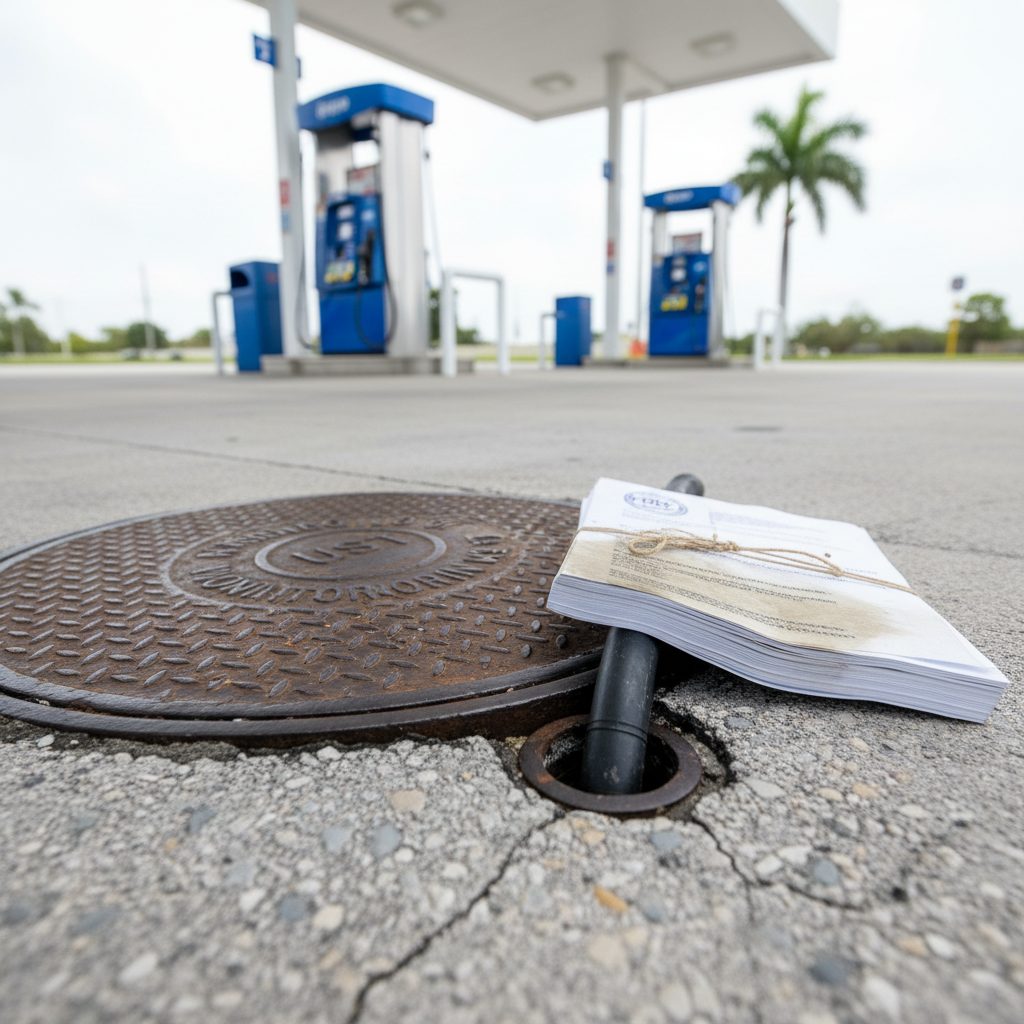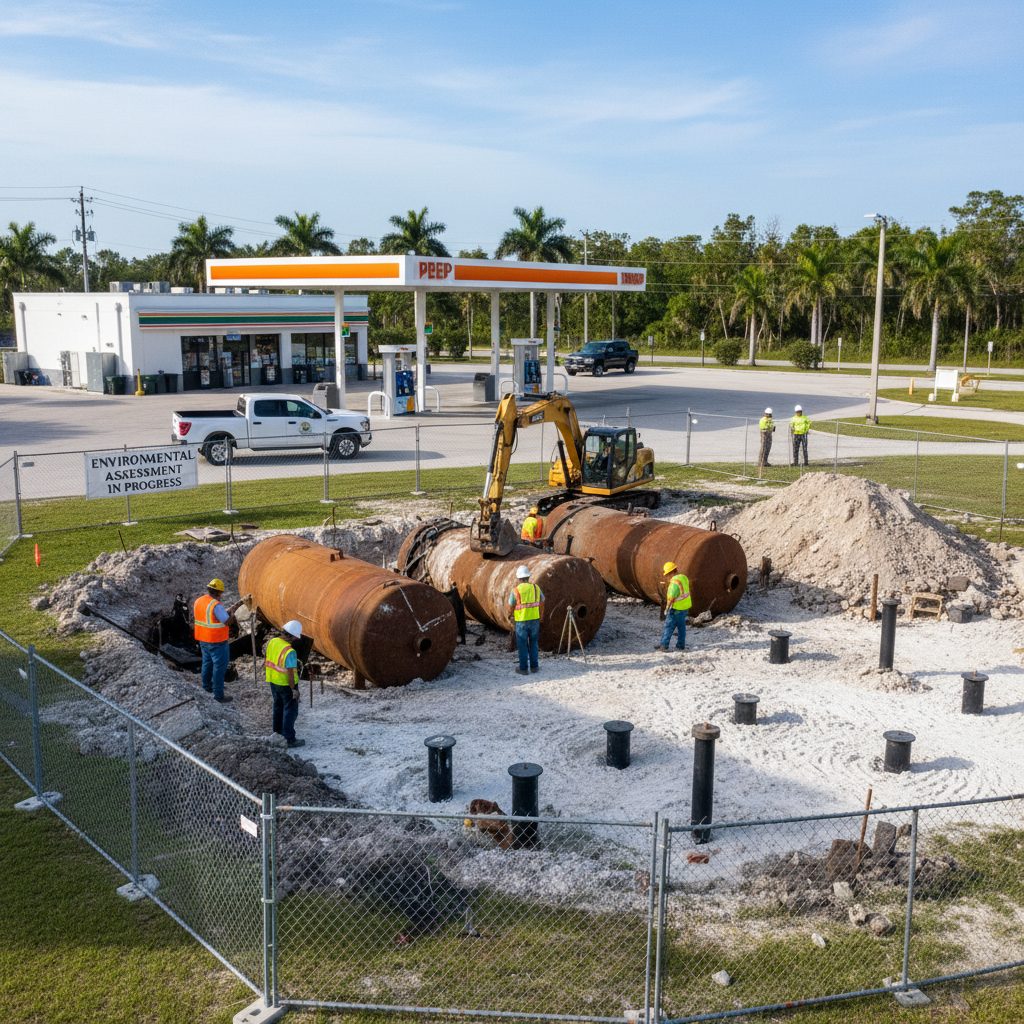
Environmental due diligence is the single most consequential workstream in any gas station transaction. Unlike a typical commercial property where a Phase I is largely procedural, a gas station carries decades of fuel storage history, regulated underground storage tank (UST) infrastructure, and Florida Department of Environmental Protection (FDEP) reporting obligations. Skipping or rushing diligence can convert a profitable acquisition into a multi-year remediation liability. This guide walks through the path a disciplined buyer follows.
UST Registration and Compliance
Every active fuel-storage UST in Florida must be registered with FDEP and the local county environmental agency. Diligence begins by pulling current registration, confirming tank age, construction (fiberglass vs. steel), leak detection compliance, cathodic protection records, and any open compliance issues. Tanks installed before 1985 carry meaningfully higher risk and may approach the end of their regulated service life. Knowing what is in the ground — and how old it is — frames everything that follows.
Phase I Environmental Site Assessment
A Phase I ESA performed to ASTM E1527 standards reviews regulatory databases, historical aerial imagery, prior site use, and surrounding land uses. For gas stations, the Phase I almost always flags the site itself as a recognized environmental condition (REC) simply because of the fueling history — that is expected, not disqualifying. What matters is whether the Phase I identifies adjacent contamination, prior discharge events, or off-site impacts that could migrate onto or off of the property.
When a Phase II Is Required
A Phase II ESA collects soil and groundwater samples to test for actual contamination. Phase II is typically triggered by UST removal/replacement history, prior discharge reports, off-site migration concerns, or lender requirements. Phase II is intrusive, takes weeks, and can dramatically affect deal economics. Negotiating who pays for Phase II — and what triggers a price reduction or termination right — should be addressed in the purchase contract before diligence begins.
FDEP Cleanup Programs and Eligibility
Florida operates several petroleum cleanup funding programs (PCPP, EDI, ATRP) that can shift remediation cost from the property owner to the state. Eligibility is site-specific, depends on discharge date and reporting timing, and is non-transferable in some scenarios. Confirming eligibility — and ensuring eligibility survives the change of ownership — can be worth six or seven figures on a contaminated site.
Post-Closing Monitoring and Reporting
Even clean sites carry recurring obligations: monthly inventory reconciliation, periodic tightness testing, annual cathodic protection inspection, and FDEP reporting. The buyer assumes these obligations at closing, and they should be priced into operating budgets.
Run Diligence Right
Our team coordinates environmental diligence across every buy-side and sell-side transaction we represent. Talk to us before you sign a LOI — getting the environmental framework right at the contract stage prevents most of the surprises that derail closings later.