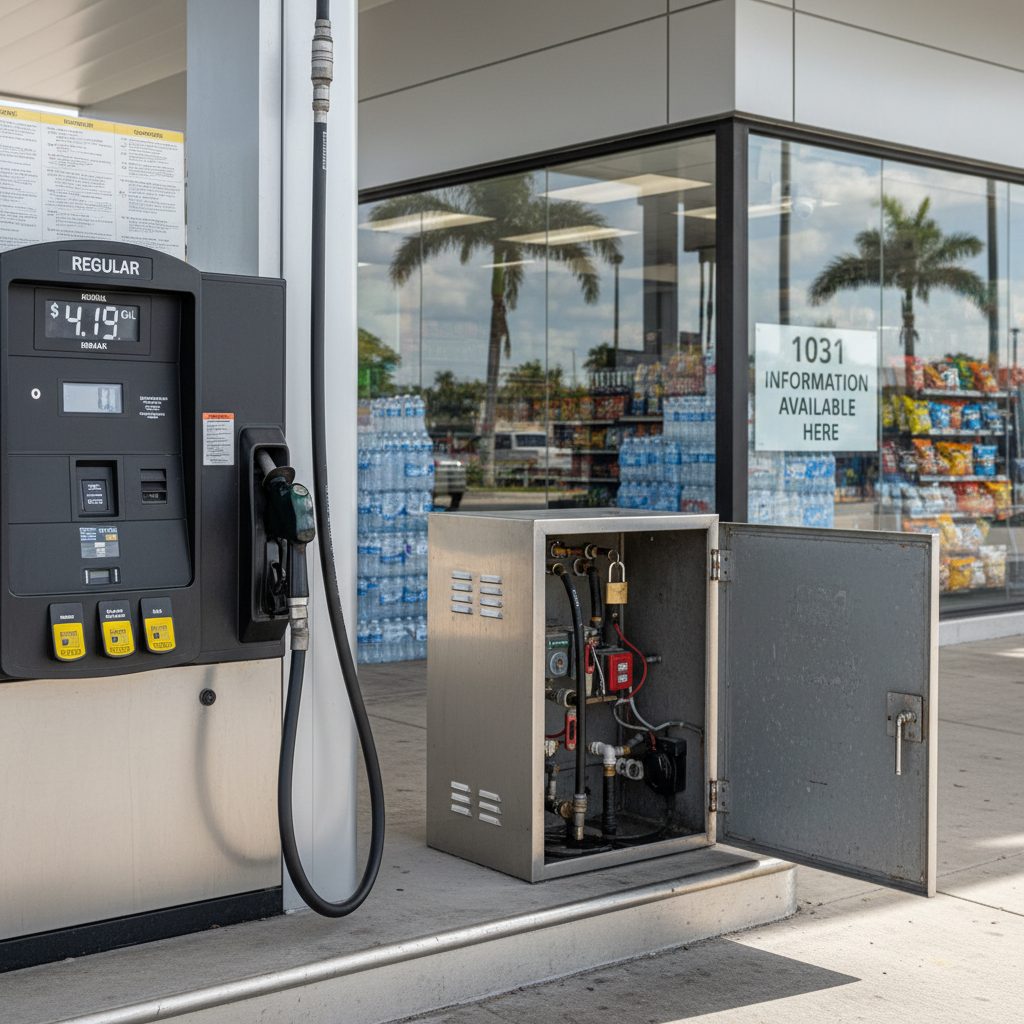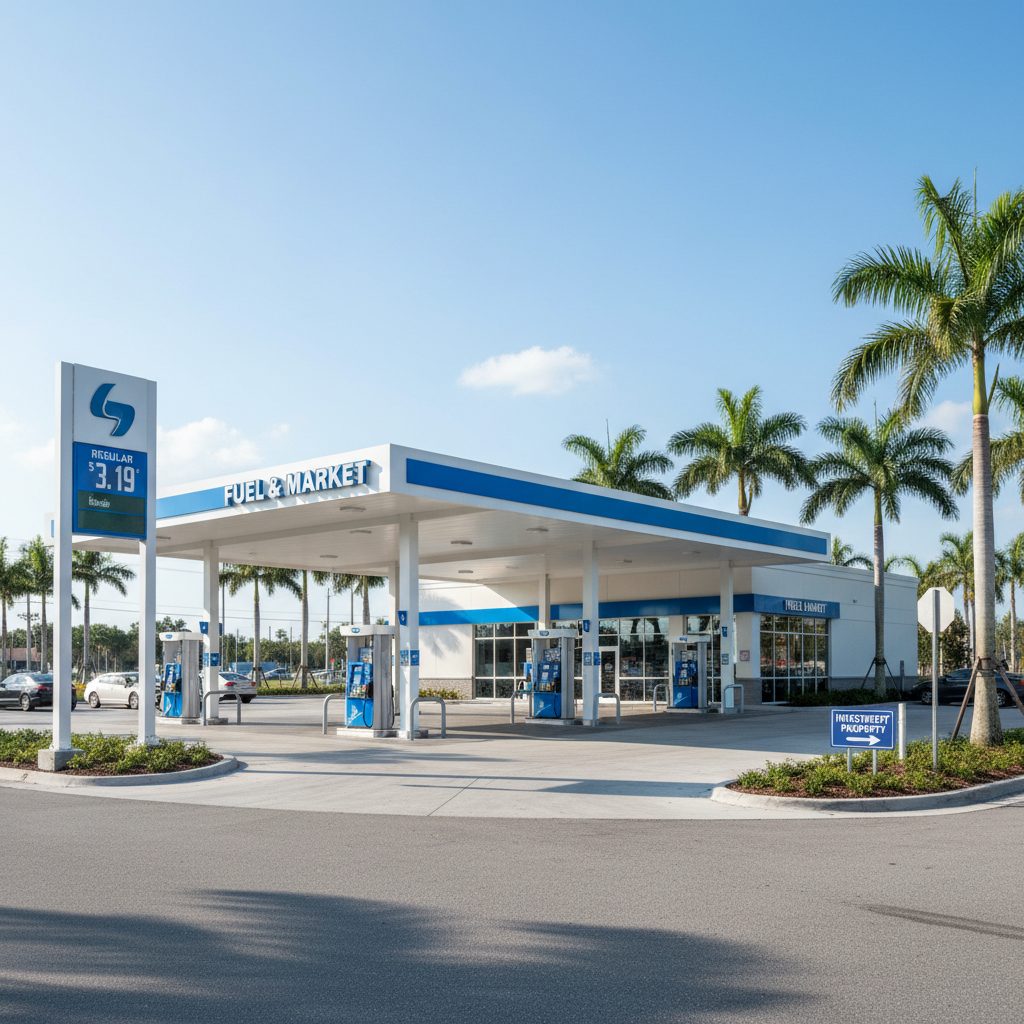
Triple-net leased gas stations have become one of the most actively pursued 1031 exchange replacement assets in Florida. The combination of corporate-guaranteed lease income, long-term passive cash flow, and limited landlord responsibilities aligns naturally with exchange buyers stepping out of management-intensive properties like multifamily, office, or operating businesses. Success in the 1031 gas station market, however, requires understanding the unique pace, underwriting, and inventory dynamics of the asset class.
Why NNN Gas Stations Fit 1031 Capital
A well-structured absolute NNN gas station lease places all property expenses — taxes, insurance, maintenance, environmental compliance — on the tenant. The landlord receives a corporate-guaranteed rent check with periodic escalations, often from a credit-tenant operator on a 15- to 20-year initial term. For an exchange buyer trading out of an active property, the structure offers genuine passivity, durable cash flow, and a recognizable corporate guarantor.
Navigating the 45-Day Identification Window
The compressed 1031 timeline — 45 days to identify, 180 days to close — is the central challenge. Gas station inventory in Florida is thin and competitive. Many of the best assets never reach the open market. We maintain a curated off-market pipeline specifically positioned to serve 1031 buyers who need to identify replacement property quickly and close within the IRS window.
Underwriting a NNN Gas Station
Beyond cap rate and rent, exchange buyers should evaluate remaining lease term, guarantor strength, rent escalations, renewal options, environmental status, brand image program, and underlying real estate residual value. A 6.25% cap rate with eight years of remaining term on a strong corporate guarantee is very different from a 6.25% cap with three years left on a franchisee guarantee. Both can be appropriate — but only after understanding what you are actually buying.
Geography Matters
Cap rates and inventory vary across Florida’s markets, and the tri-county Miami area shows the sharpest spreads. Palm Beach tends to trade tighter on premium demographic corridors. Miami-Dade offers depth and bilingual operator inventory. Broward combines port-driven diesel demand with strong retail corridors. Monroe County and the Florida Keys is supply-constrained and tourism-driven — assets there rarely trade publicly.
Start Your Search
Submit your 1031 acquisition criteria — capital available, cap rate target, brand preference, geographic radius, and timing — and we will return matching on- and off-market opportunities across our investment sales pipeline.