Turnkey Operating Leases
St. Lucie County stores leased with equipment, coolers, and POS in place — the fastest route from signature to operating income.
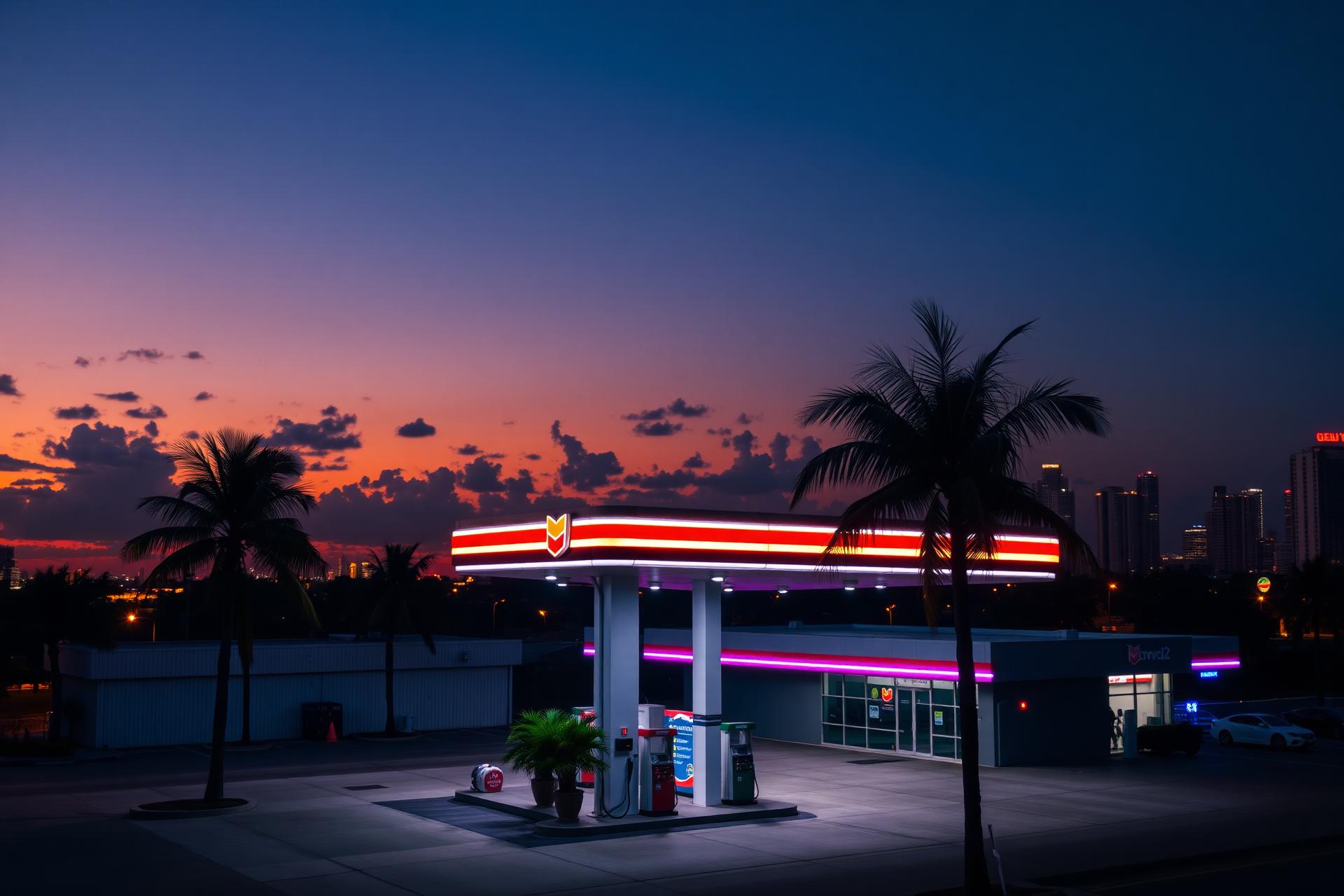
St. Lucie County County • Treasure Coast
Convenience stores for lease across St. Lucie County, Florida are offered as turnkey operating leases, shell retail leases, and c-store-with-fuel dealer leases. Rent is underwritten against inside-sales gross profit rather than square footage, and permits, equipment ownership, and any fuel supply agreement are negotiated alongside the lease. Led by Bobby Berrido, CCIM, CMAA. All transactions are brokered through Fausto Commercial.
Confidential Inquiry
Confidential outreach for Florida gas station, c-store, truck stop, and fuel real estate. A specialist responds within one business day.
(305) 518-1545Leasing a St. Lucie County convenience store puts an operator into inside-sales income without buying the real estate. The three structures we broker are a turnkey operating lease including equipment and coolers, a shell lease where the tenant builds out, and a c-store-plus-fuel dealer lease with a supply agreement attached.
St. Lucie County lease demand tracks residential growth (top-10 fastest large city), commuter, and retirement, and the leasable store inventory concentrates on US-1, SW Port St Lucie Blvd, and Prima Vista Blvd with I-95 access.
Rent coverage is the whole underwriting. If rent plus labor, utilities, and card fees consumes the store's gross profit, the lease fails no matter how attractive the location looks.
County-wide fuel inventory is covered on our St. Lucie County gas stations for sale and lease hub.
What We Broker
St. Lucie County stores leased with equipment, coolers, and POS in place — the fastest route from signature to operating income.
Branded and unbranded fuel facilities leased with the store, where supply terms set your cents-per-gallon for the entire term.
Retail shells on US-1 suited to a new c-store build-out, including permitting and image-program considerations.
Own a St. Lucie County store property? We screen tenant experience, capital, and supply relationships before delivering a signed lease.
Compare leasing against acquiring the same St. Lucie County inventory, including how each path treats UST liability and equity build.
Tobacco, beer and wine, lottery, and food-service permitting sequenced so the store opens with every revenue line live.
Convenience store rents across St. Lucie County are set by corridor position and delivered condition. A cold-shell space on US-1 leases materially below a turnkey store with coolers, shelving, and a walk-in already installed. In a mid-sized market driven by residential growth (top-10 fastest large city), commuter, and retirement, we underwrite the rent against realistic gross profit rather than against comparable asking rates.
The clauses that matter in a St. Lucie County convenience store lease are exclusive use, assignment and subletting, personal guarantee scope, holdover rent, and who owns the coolers and shelving at expiration. Landlord-owned equipment quietly reduces what the leasehold is worth on resale.
Logistics traffic makes St. Lucie County a diesel market as much as a gasoline market. Where a site sits relative to I-95 and to truck-permitted turning movements on US-1 determines whether it can capture commercial volume at all — a site with tight access is a passenger-car store regardless of how much freight passes it.
Commercial accounts, fleet cards, and cost-plus supply arrangements price differently than retail gallons, so we separate them before applying any multiple. Concentration matters too: volume dependent on one carrier or one distribution center is worth less than the same gallons drawn from broad I-95 flow.
St. Lucie County, with about 278,652 residents, is a mid-sized Florida market. Activity concentrates on US-1 and SW Port St Lucie Blvd, with regional throughput on I-95 and Florida's Turnpike. County averages hide wide spreads — core corridors and outlying trade areas clear at very different multiples.
The buyer pool across St. Lucie County is a mix of local owner-operators expanding by one or two units, multi-site operators and jobbers placing supply volume, 1031 and net-lease capital pricing Florida yield, and developers valuing the dirt for a different use. Which pool bids highest depends on whether the real estate conveys and on how much of the earnings is documentable.
Every St. Lucie County engagement stays confidential — blind teaser first, NDA-gated package second, and no public listing unless the owner asks for one. All transactions are brokered through Fausto Commercial.
Rent Economics
Rent on a St. Lucie County c-store lease is set from inside-sales gross profit, not from a per-square-foot market rate. Landlords and operators both test whether the store's departmental margin covers rent with room left for payroll, utilities, insurance, and credit-card processing.
Ask who owns the coolers, the POS, the walk-in, and the signage. Equipment ownership decides who funds a compressor failure at 2 a.m., and it is the most common gap in a US-1 store lease.
Also negotiate assignment rights up front. An operator who cannot assign the lease has no exit, which caps the value of everything they build over the term.
Buyers and operators searching St. Lucie County usually widen the radius. These adjacent markets share the same corridors and buyer pool.
St. Lucie County • Treasure Coast
St. Lucie County • Treasure Coast
Related asset class in the same trade area.
Related asset class in the same trade area.
Related asset class in the same trade area.
Every Florida market we cover.
Guides, services, and market hubs for buyers, sellers, and operators of convenience stores in St. Lucie County.
FAQ
Tell us your criteria, capital position, and timing. We will match you against current and upcoming St. Lucie County inventory — including opportunities that never reach a public listing.