High-Flow Diesel Sites
St. Lucie County properties with dedicated high-speed diesel lanes serving Class 8 traffic off I-95.
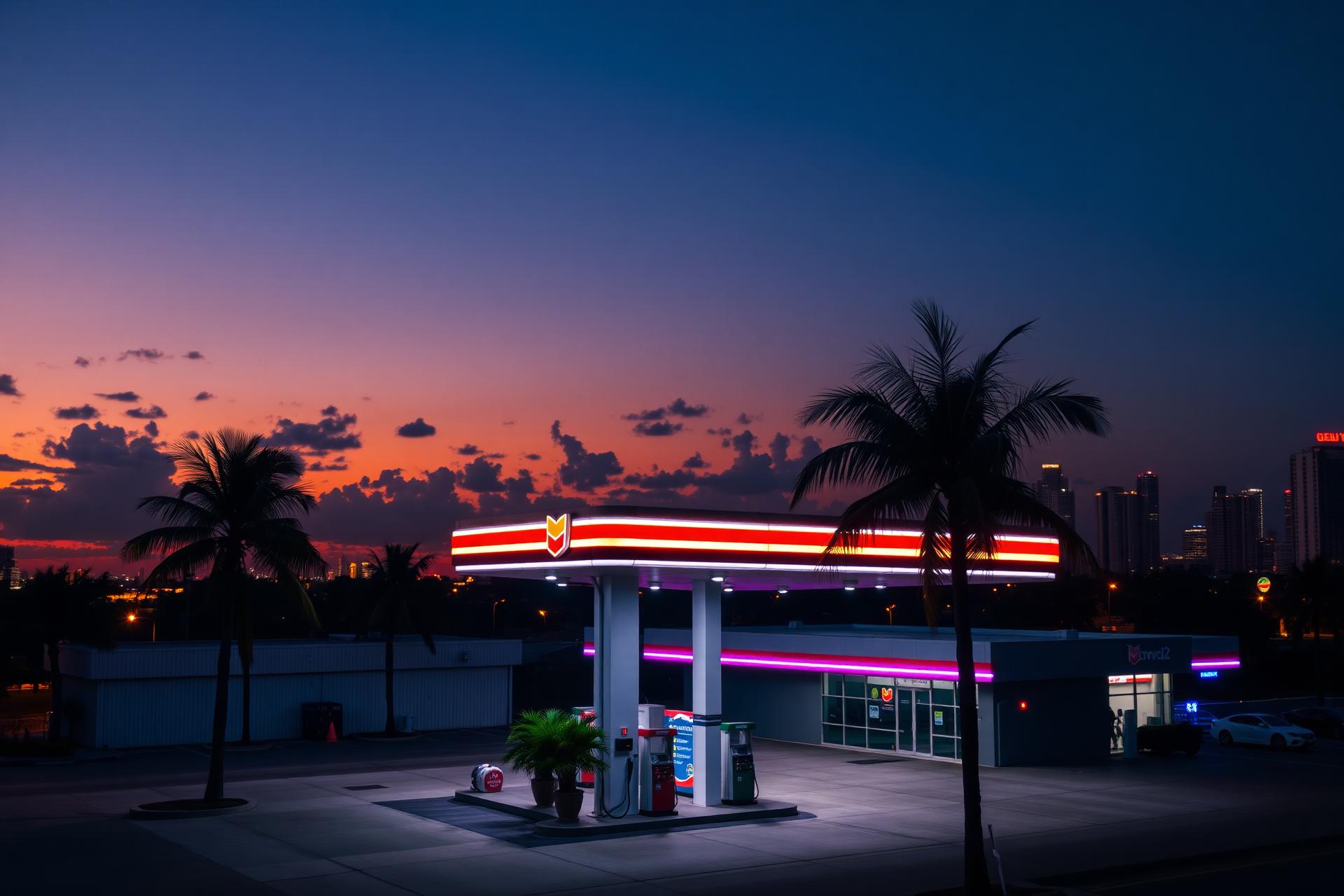
St. Lucie County County • Treasure Coast
Truck stops for sale across St. Lucie County, Florida are valued on diesel throughput, truck parking count, and ancillary revenue from food, showers, and repair bays. Access from I-95, canopy clearance, and turning radius decide whether a site can hold Class 8 volume at all. Led by Bobby Berrido, CCIM, CMAA. All transactions are brokered through Fausto Commercial.
Confidential Inquiry
Confidential outreach for Florida gas station, c-store, truck stop, and fuel real estate. A specialist responds within one business day.
(305) 518-1545A truck stop is not a large gas station. Diesel margin per gallon is thinner than gasoline, volume is far higher, and profitability depends on parking, dwell time, and what a driver buys while parked.
St. Lucie County draws Class 8 volume from I-95 and Florida's Turnpike, with commercial fuel demand supported by residential growth (top-10 fastest large city), commuter, and retirement.
We underwrite these as commercial fueling businesses: diesel gallons, DEF sales, parking capacity, shower and scale revenue, restaurant or QSR income, and any repair or tire bay.
County-wide fuel inventory is covered on our St. Lucie County gas stations for sale and lease hub.
What We Broker
St. Lucie County properties with dedicated high-speed diesel lanes serving Class 8 traffic off I-95.
QSR or full-service restaurant income alongside fuel, plus showers, laundry, and driver amenities that hold dwell time.
Excess acreage for overnight parking — the single scarcest and most defensible revenue asset in the sector.
Private cardlock and fleet fueling facilities serving logistics operators rather than retail drivers.
Confidential disposition to regional operators, jobbers, and travel-center platforms without disturbing staff or fuel supply.
Bigger tank fields, more dispensers, and heavier traffic mean broader Phase I scope and closer FDEP scrutiny.
Truck stop value across St. Lucie County is driven by freight flow on I-95, not by local population (278,652 residents). Diesel gallons, truck parking count, and driver amenities set the ceiling. We underwrite fleet-card mix and cost-plus contracts separately from retail diesel, because they price at completely different margins.
Buyers should model a St. Lucie County truck stop on three revenue lines — diesel gallons, inside sales, and parking or amenity income — and stress each independently. A site that depends on one long-haul carrier's routing is a different risk than one drawing broad I-95 traffic.
Logistics traffic makes St. Lucie County a diesel market as much as a gasoline market. Where a site sits relative to I-95 and to truck-permitted turning movements on US-1 determines whether it can capture commercial volume at all — a site with tight access is a passenger-car store regardless of how much freight passes it.
Commercial accounts, fleet cards, and cost-plus supply arrangements price differently than retail gallons, so we separate them before applying any multiple. Concentration matters too: volume dependent on one carrier or one distribution center is worth less than the same gallons drawn from broad I-95 flow.
St. Lucie County, with about 278,652 residents, is a mid-sized Florida market. Activity concentrates on US-1 and SW Port St Lucie Blvd, with regional throughput on I-95 and Florida's Turnpike. County averages hide wide spreads — core corridors and outlying trade areas clear at very different multiples.
The buyer pool across St. Lucie County is a mix of local owner-operators expanding by one or two units, multi-site operators and jobbers placing supply volume, 1031 and net-lease capital pricing Florida yield, and developers valuing the dirt for a different use. Which pool bids highest depends on whether the real estate conveys and on how much of the earnings is documentable.
Every St. Lucie County engagement stays confidential — blind teaser first, NDA-gated package second, and no public listing unless the owner asks for one. All transactions are brokered through Fausto Commercial.
Underwriting
A St. Lucie County truck stop's value comes from diesel throughput and truck parking. Parking is the scarcest asset in the sector — a site with fifty striped spaces holds drivers overnight and converts that dwell time into showers, food, and merchandise that carry far better margin than the fuel itself.
Site geometry decides feasibility before economics do. Canopy clearance, lane width, turning radius, and separate car and truck circulation determine whether a property can serve Class 8 traffic without bottlenecking.
Diesel margin is thin and volume-driven, so freight patterns matter. A I-95 location with steady regional and long-haul flow underwrites very differently from a site that depends on seasonal or single-shipper traffic.
Buyers and operators searching St. Lucie County usually widen the radius. These adjacent markets share the same corridors and buyer pool.
St. Lucie County • Treasure Coast
St. Lucie County • Treasure Coast
Related asset class in the same trade area.
Related asset class in the same trade area.
Related asset class in the same trade area.
Every Florida market we cover.
Guides, services, and market hubs for buyers, sellers, and operators of truck stops in St. Lucie County.
FAQ
Tell us your criteria, capital position, and timing. We will match you against current and upcoming St. Lucie County inventory — including opportunities that never reach a public listing.