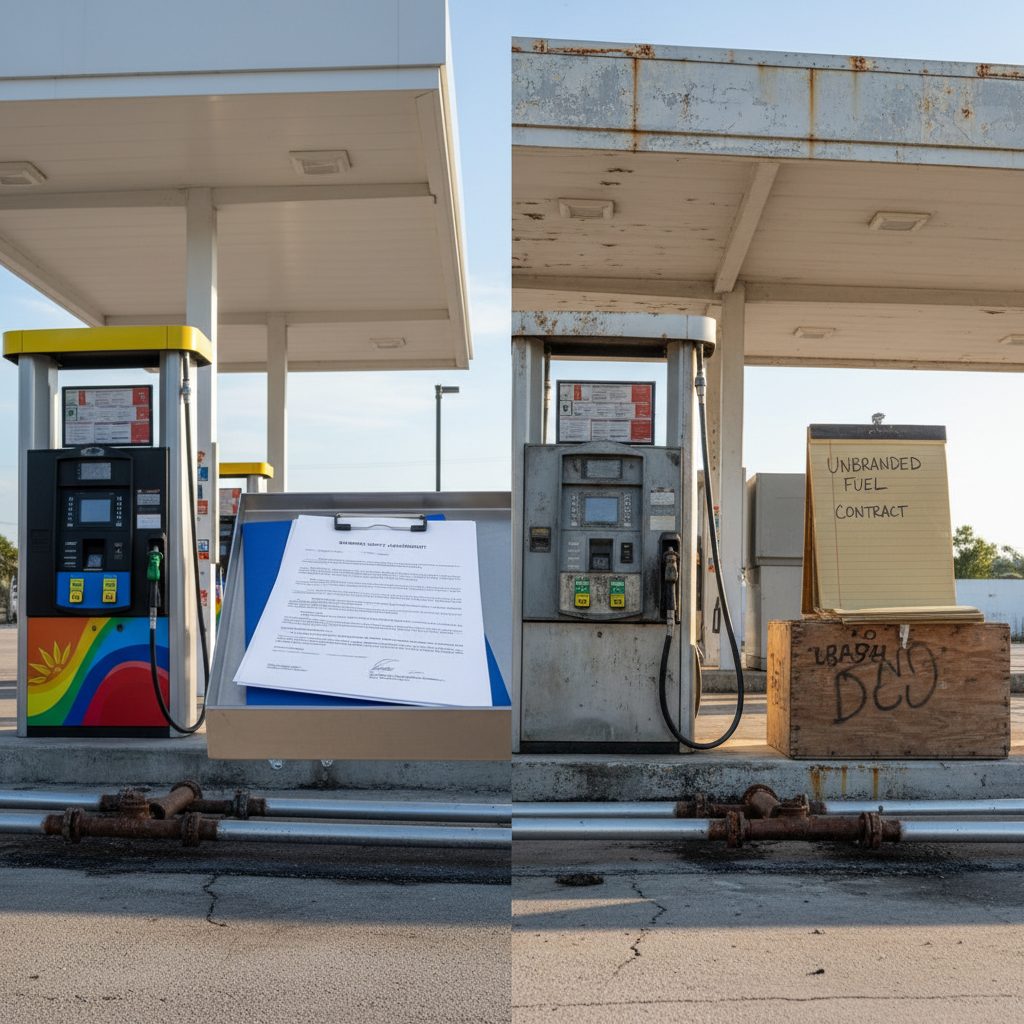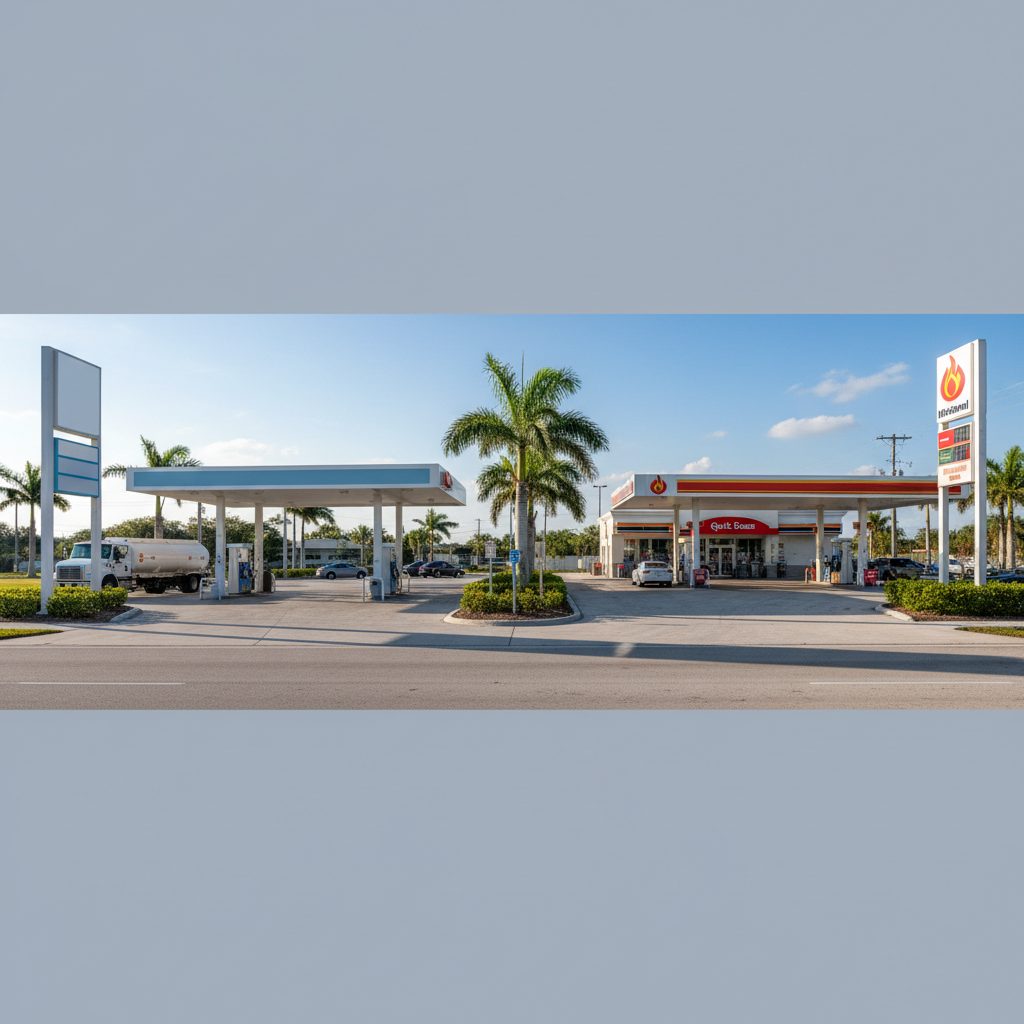
Every Florida gas station operator eventually faces the same strategic question: stay branded with a major oil company, or convert to an unbranded supply program. The decision affects fuel margin per gallon, capital obligations, customer traffic patterns, and ultimately the resale value of the real estate. There is no universally correct answer — only the answer that fits the site, the operator, and the corridor.
Branded Fuel Supply: Chevron, Shell, Exxon, Mobil, BP, Marathon
A branded agreement gives the operator access to the major's image program, loyalty platforms, credit card processing, and brand-driven traffic. In return, the operator commits to a long-term purchase obligation (typically 10 to 15 years), accepts price-per-gallon terms set by the supplier, and often takes an image loan that amortizes through fuel purchases. The branded model trades flexibility and per-gallon margin for traffic and resale liquidity — branded NNN stations almost always trade at lower cap rates than unbranded operator-owned sites.
Unbranded Fuel Supply
Unbranded programs replace the major's image with a generic or regional brand and free the operator to shop fuel pricing across multiple distributors. Per-gallon margin is typically higher, contract terms are shorter, and capital obligations are lighter. The trade-off is reduced traffic from brand-loyal customers and a smaller buyer pool at resale. Unbranded operators frequently rebrand the c-store to a strong proprietary identity — sometimes outperforming the prior branded gallon volume in price-sensitive trade areas.
Image Loans and Capital Obligations
Image loans are amortizing capital advances from the major oil supplier used to fund canopy upgrades, MPD replacements, c-store remodels, and signage. Repayment runs through a per-gallon surcharge over the contract term. Image loans are not free money — they are debt with strings, and a remaining image loan balance reduces the proceeds available at sale. Always read the early-termination clause carefully before signing.
Conversion Strategy
Many Florida operators run a hybrid playbook: take a branded contract for the canopy and image traffic on flagship corridor sites, and run unbranded on infill or independent-operator sites where price-conscious customers dominate. We routinely help operators across all tri-county Miami market model branded vs. unbranded scenarios and time conversions to coincide with contract renewals or acquisitions.
Talk to a Specialist
Our fuel supply agreement advisory service reviews existing contracts, models conversion scenarios, and negotiates new supply agreements on behalf of operators. Request a confidential review.