Converting a branded Florida gas station to unbranded — or to a locally controlled supply agreement — is one of the most consequential operational decisions an owner-operator can make. Done correctly, the transition unlocks meaningfully higher fuel margins and full supplier flexibility. Done without proper planning, it creates supply gaps, brand-litigation exposure, and customer attrition that can take months to recover.
Florida's fuel-retail market supports a deep network of independent jobbers and rack-priced supply agreements that make unbranded operation viable across most of the state. Fuel supply agreement advisory for Florida operators is the foundational work that must precede any debranding decision — understanding your supply options before you exit your current brand agreement determines whether the transition generates the margin upside operators seek.
Image Loan Payoff and Contract Notice Requirements
Most branded supply agreements in Florida are structured as PMPA (Petroleum Marketing Practices Act) franchise relationships, with the brand providing an image loan — a below-market financing package covering canopy, dispenser, and signage installations — that must be repaid upon early termination. Image loan balances vary widely based on the vintage of the last brand refresh: recent refreshes for major brands can carry balances of $150,000–$400,000 on a standard three-to-five-station refreshed site. Operators must obtain a payoff statement from the oil company's franchise department, not their jobber, as the loan is typically held directly by the brand.
Contract notice requirements are governed by the PMPA and the specific supply agreement, but non-renewal notices from the operator typically require 90–180 days written notice delivered via certified mail to the brand's franchise administration office. Failure to provide proper notice can trigger automatic renewal clauses in multi-year agreements, extending the operator's brand obligation by a full contract term. Florida operators should have counsel review the termination and non-renewal provisions before sending any written notice.
Debranding Steps and Physical Transition
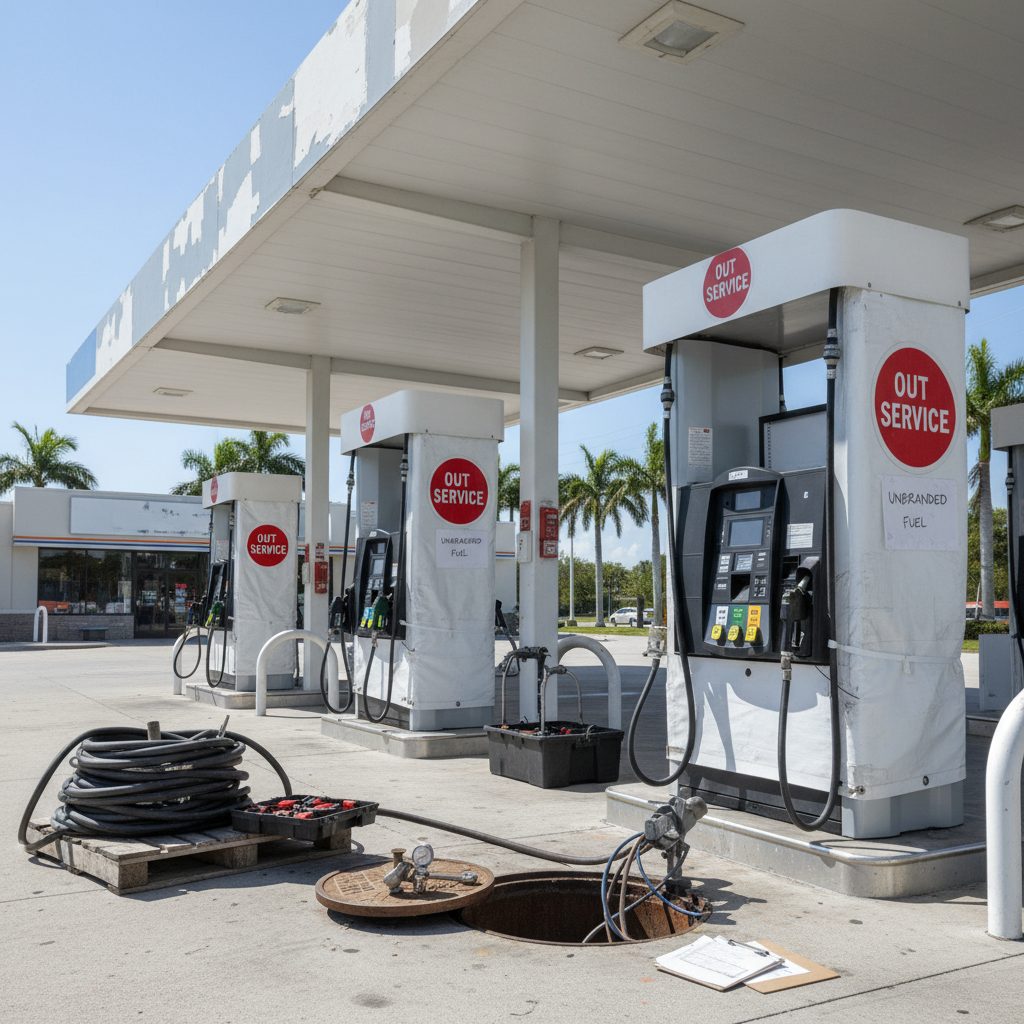
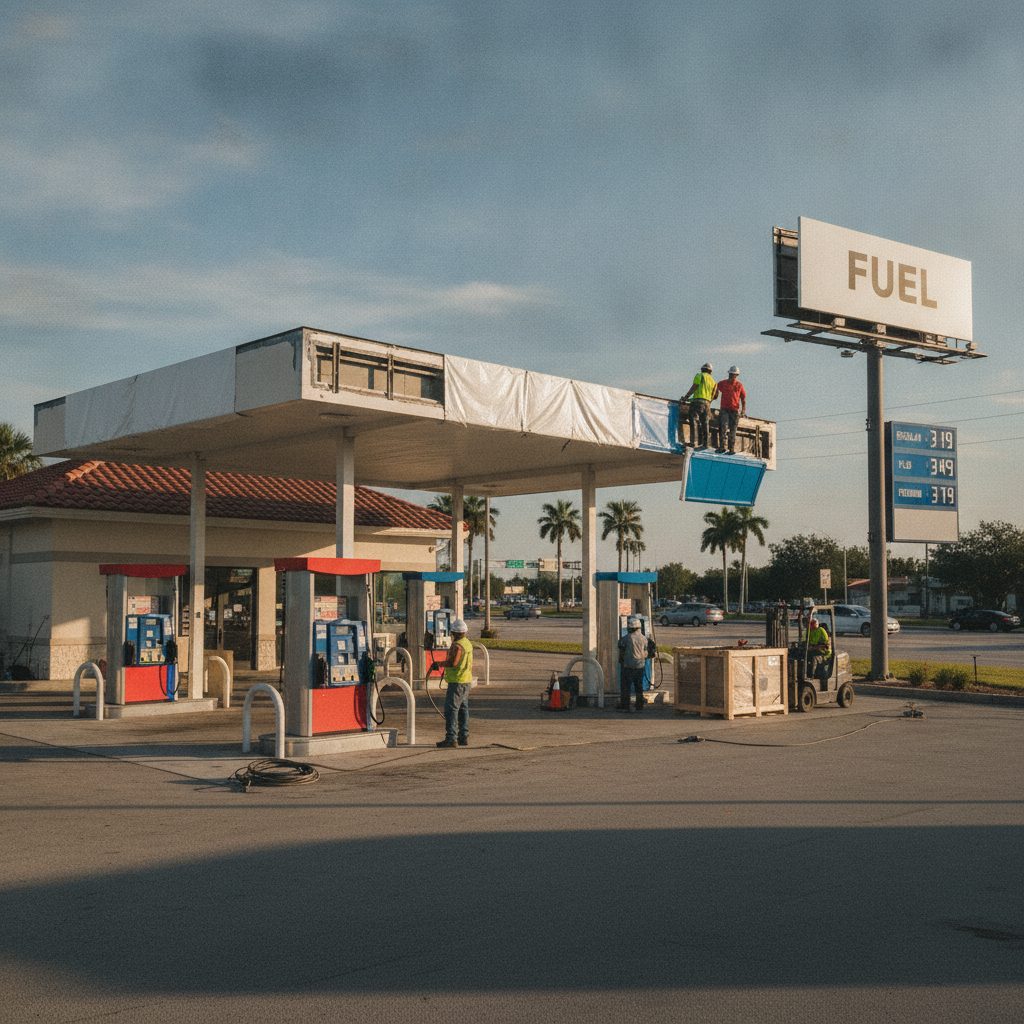
The physical debranding process must be completed within the timeframe specified in the supply agreement — typically 30–60 days following contract expiration. This includes removal or permanent covering of all brand-identified signage (canopy fascia, pole sign, dispenser toppers, building graphics), return or destruction of branded point-of-sale materials, and — in some agreements — dispenser fascia replacement if the equipment carries proprietary brand panels. Florida's year-round operating environment means most debranding projects can be executed without meaningful throughput disruption if contractors are scheduled in advance.
Operators should photograph and document all removed brand elements, retain removal invoices, and obtain written confirmation from the brand's franchise department that debranding obligations have been satisfied. Failure to fully debrand exposes operators to brand-use litigation and potential injunctive relief — an outcome that Florida courts have historically treated seriously under PMPA framework. A checklist-driven project manager, not a verbal handshake with a sign contractor, is the appropriate tool for this phase.
Jobber Selection and the Margin Upside Model
Florida's independent jobber market is robust, with regional suppliers operating rack-priced and spot-market supply across all major terminals including Port Everglades, Tampa, Jacksonville, and Pensacola. An unbranded operator sourcing fuel at a negotiated rack-plus margin from a qualified jobber typically captures $0.05–$0.12 per gallon of additional margin versus the brand's dealer-tankwagon pricing, depending on volume, location, and negotiated terms. At 150,000 gallons per month, this translates to $7,500–$18,000 in additional monthly fuel gross profit.
Jobber selection criteria should include terminal access diversity (to ensure supply during disruptions), credit terms, emergency delivery protocols, and compatibility with the operator's existing dispenser technology if transitioning to a non-proprietary payment system. Some Florida jobbers offer private-label card programs and fleet accounts that partially offset the loss of branded network card traffic — an important modeling input when projecting net margin uplift. Our fuel supply advisory team can model the full margin transition for any Florida operator considering debranding.
Risk of Supply Gap and Transition Mitigation
The single greatest operational risk in a Florida brand conversion is a supply gap — days or weeks between the expiration of the branded supply agreement and the first delivery under the new jobber contract. Florida's hurricane season, terminal congestion events, and rail-to-barge delivery dependencies create supply volatility that an unbranded operator without a multi-supplier strategy can experience acutely. Operators should execute the new jobber agreement at least 30 days before brand contract expiration and confirm first-delivery scheduling in writing before sending the brand termination notice.
Customer attrition risk is real but quantifiable. Branded loyalty programs — Fuel Rewards, BPme, Chevron Texaco Rewards — will no longer apply at the newly unbranded site, and fleet card acceptability may change depending on dispenser reprogramming. Operators in densely competitive Florida markets should budget for a 4–8 week transition promotion to retain price-sensitive customers. The net economics still favor conversion for most high-volume sites, but the transition period requires active management and cash-flow planning to absorb temporary margin softness.
Frequently Asked Questions
Speak With a Florida Gas Station Specialist
Request a confidential consultation or off-market opportunities and pricing through our contact page, or call +1-305-518-1545. The Gas Station Group is headquartered at 8603 S Dixie Hwy, Miami, FL 33143. Principal: Bobby Berrido.
Continue Reading