C-Stores With Fuel in Miami
Combined fuel and inside-sales operations, underwritten on gallons, cents-per-gallon after freight and card fees, and basket size.
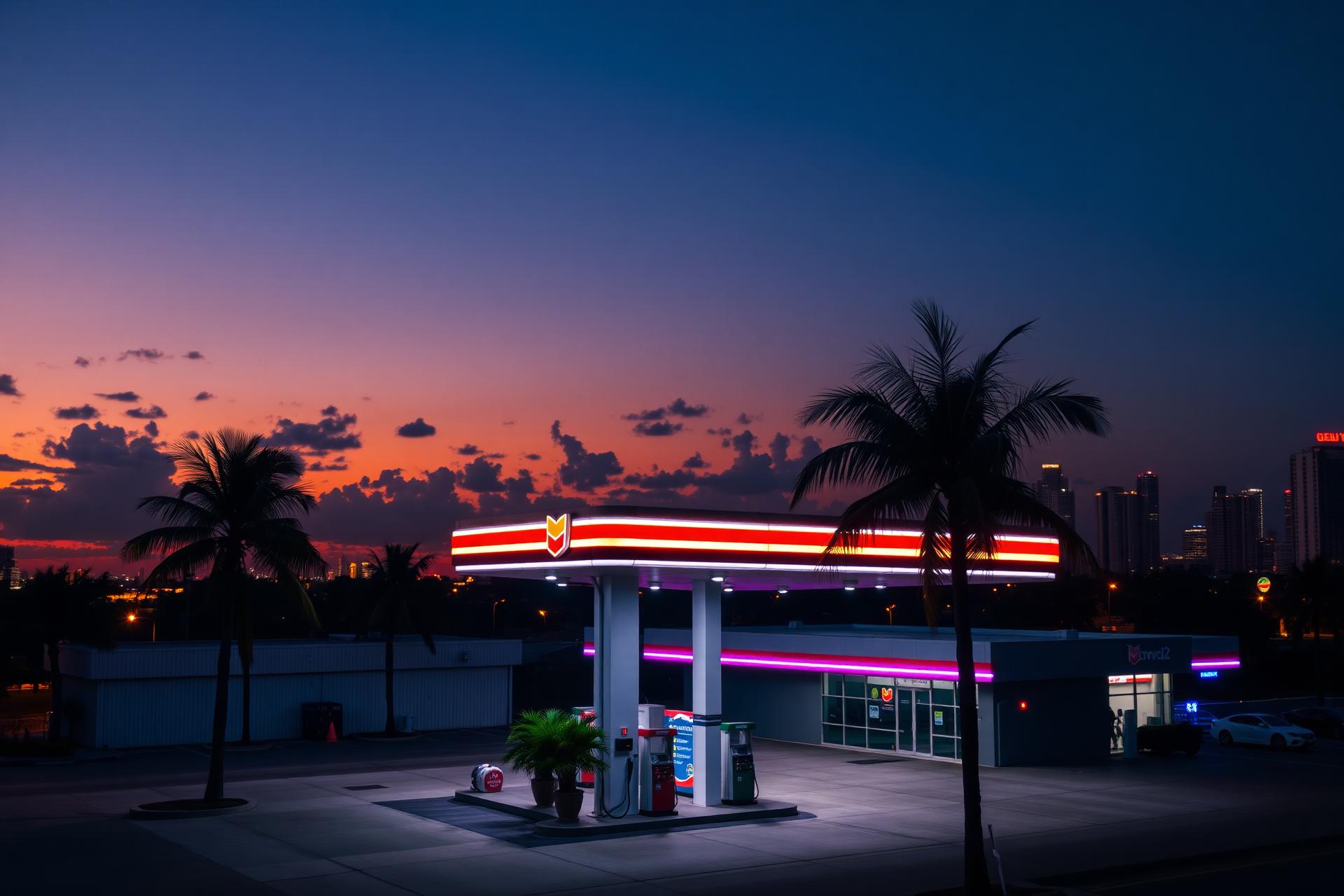
Miami-Dade County • Miami-Dade
Convenience stores for sale in Miami, Florida trade on inside sales, not just fuel. Value is set by gross profit by department, rent or real estate basis, tobacco, beer, and lottery permits, and whether fuel is attached. The Gas Station Group brokers c-stores with and without fuel in Miami, Florida. Led by Bobby Berrido, CCIM, CMAA. All transactions are brokered through Fausto Commercial.
Confidential Inquiry
Confidential outreach for Florida gas station, c-store, truck stop, and fuel real estate. A specialist responds within one business day.
(305) 518-1545Miami convenience store listings fall into three groups: c-stores with fuel, c-stores without fuel, and food-forward stores where the kitchen program carries the basket. Each is underwritten differently, and buyers who apply gas-station math to a dry store almost always overpay.
Demand in Miami, Florida is driven by port logistics, tourism, and international trade, with the strongest inside-sales sites clustered on Biscayne Blvd, Flagler St, and Coral Way.
Most stores here sell quietly. Owners do not want employees, suppliers, or competitors to know before a contract is signed, so the majority of real inventory never reaches a public listing platform.
Also review gas stations for sale in Miami and gas stations for lease in Miami.
What We Broker
Combined fuel and inside-sales operations, underwritten on gallons, cents-per-gallon after freight and card fees, and basket size.
Standalone Miami convenience stores valued purely on inside-sales gross profit, rent coverage, and permit transferability.
Florida tobacco, beer and wine, and lottery permits do not transfer automatically. We sequence applications so revenue never goes dark at closing.
Fee-simple Biscayne Blvd store properties where the buyer acquires the dirt, the building, and the operating business together.
Confidential seller representation — valuation, buyer vetting, and a controlled process that protects staff and supplier relationships.
SBA 7(a), conventional, and seller-carry structures used by Florida c-store buyers, including how lenders treat inventory and goodwill.
Buyers in Miami underwrite convenience stores from the department report, not the tax return. We rebuild margin by category — beverage, beer and wine, tobacco, prepared food, lottery, services — then subtract the true cost of a manager, shrink, and card fees. Tobacco-heavy stores on Biscayne Blvd carry margin risk that food-service stores do not.
Confirm the transferability of the Miami store's alcohol and tobacco licenses, lottery terminal, EBT authorization, and food-service permits before pricing. Each has its own Florida approval timeline, and buyers routinely mistake a license delay for a broken deal.
Miami demand is visitor-weighted, which changes how a site should be underwritten. Peak-season gallons on Biscayne Blvd can run well above shoulder-season volume, so pricing off a twelve-month average understates a strong site and overstates a weak one. We model high season, low season, and a blended year separately, then price off the sustainable blend.
Visitor-driven stores also skew the inside-sales mix toward beverage, snacks, and single-serve items rather than the tobacco and multi-pack basket of a commuter store. That mix carries better gross margin but more revenue volatility, and lenders discount it accordingly. Hurricane-season disruption, insurance cost, and windstorm deductibles belong in the Miami expense model, not in a footnote.
Miami sits in Miami-Dade County with roughly 442,241 residents and functions as a major-metro Miami-Dade trade area. Retail transactions cluster on Biscayne Blvd and Flagler St, and regional access runs through I-95, SR 836 (Dolphin Expy), and US-1. That geography, more than countywide averages, determines what a site here earns.
Pricing in Miami is decided by who is bidding. Operators pay for throughput and store profit, jobbers pay for future gallons through their rack, net-lease and 1031 buyers pay for durable rent, and developers pay for the land. Running a targeted process against all four is how a seller finds the top of the range instead of the first number offered.
Every Miami engagement stays confidential — blind teaser first, NDA-gated package second, and no public listing unless the owner asks for one. All transactions are brokered through Fausto Commercial.
Underwriting
A Miami convenience store is valued on inside-sales gross profit and the quality of its occupancy. Buyers capitalize sustainable store-level cash flow after rent, labor, and card fees, then adjust for lease term, permit status, and any fuel contract attached to the site.
Department mix matters more than total revenue. Tobacco carries volume with thin margin, beer and beverage carry both, and prepared food carries the highest margin per square foot. Two Biscayne Blvd stores with identical sales can differ 30% in value on mix alone.
Real estate changes the model entirely. A store sold with fee-owned land is priced as a property with a business attached; a leased store is priced as a business with an occupancy risk attached.
Buyers and operators searching Miami usually widen the radius. These adjacent markets share the same corridors and buyer pool.
Miami-Dade County • Miami-Dade
Miami-Dade County • Miami-Dade
Miami-Dade County • Miami-Dade
Related asset class in the same trade area.
Related asset class in the same trade area.
Related asset class in the same trade area.
County-wide inventory and market detail.
Every Florida market we cover.
Guides, services, and market hubs for buyers, sellers, and operators of convenience stores in Miami.
FAQ
Tell us your criteria, capital position, and timing. We will match you against current and upcoming Miami inventory — including opportunities that never reach a public listing.