Dealer Leases in Miami
Branded fuel facilities leased with a supply agreement attached — Chevron, Shell, Exxon, Mobil, BP, and Marathon programs. Rent, gallon commitments, and remaining image obligations are underwritten together.
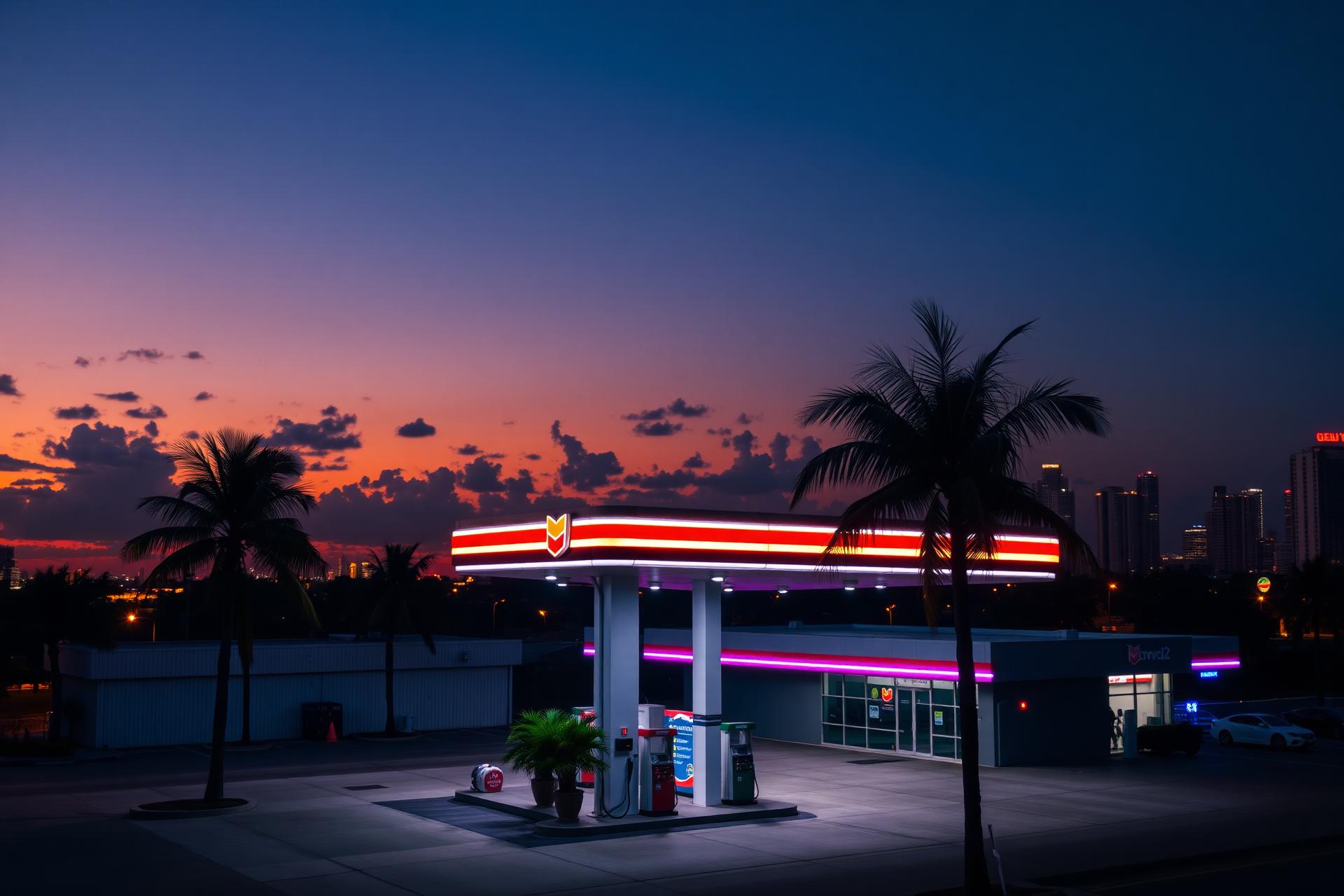
Miami-Dade County • Miami-Dade
Gas stations for lease in Miami, Florida are brokered as dealer leases on branded fuel facilities, ground leases on fee-owned pads, and full operating leases that include the convenience store and fuel equipment. The Gas Station Group represents operators and landlords on Biscayne Blvd, Flagler St, and Coral Way, led by Bobby Berrido, CCIM, CMAA. All transactions are brokered through Fausto Commercial.
Confidential Inquiry
Confidential outreach for Florida gas station, c-store, truck stop, and fuel real estate. A specialist responds within one business day.
(305) 518-1545Leasing a gas station in Miami requires rent, a deposit, initial fuel and c-store inventory, and Florida licensing — not a full acquisition price. Rent is set by the site's gallon throughput and inside sales, so a high-volume Biscayne Blvd station commands more rent than an infill neighborhood site but produces proportionally more fuel margin and basket revenue.
Miami is a Miami-Dade market of roughly 442,241 residents in Miami-Dade County. Lease demand here tracks the same forces that set station value: port logistics, tourism, international trade, commuter density, and cruise passengers. Access runs through I-95, SR 836 (Dolphin Expy), US-1, and Florida's Turnpike, and the leasable fuel inventory concentrates on Biscayne Blvd, Flagler St, Coral Way, NW 27th Ave, and Calle Ocho.
PortMiami, MIA cargo traffic, and dense urban corridors drive some of the state's highest per-station fuel volumes.
Because leased stations are rarely advertised publicly, most Miami lease opportunities move through operator networks, jobber relationships, and landlord referrals before they ever reach a listing platform. That is the inventory we work — including convenience stores for lease with and without fuel, and diesel-capable sites where I-95 traffic supports them.
Considering ownership instead? Compare the same market on our Miami gas stations for sale page, or read our lease vs. buy analysis for Florida operators.
Lease Structures
Branded fuel facilities leased with a supply agreement attached — Chevron, Shell, Exxon, Mobil, BP, and Marathon programs. Rent, gallon commitments, and remaining image obligations are underwritten together.
Long-term ground leases on fee-owned Biscayne Blvd pads with CPI escalations and renewal options — the structure institutional landlords and developers prefer.
Turnkey leases that include the convenience store, fuel equipment, coolers, and POS — the fastest route to operating income in Miami-Dade County.
C-stores with and without fuel, underwritten on rent-to-inside-sales coverage, tobacco and lottery eligibility, and food-program capacity.
Diesel-heavy sites serving I-95 and SR 836 (Dolphin Expy) trucking, where zoning and canopy clearance support commercial fleet volume.
If you own a Miami fuel property and need a qualified operator, we screen tenant experience, capital, and supply relationships before delivering a lease.
Rent on a Miami station has to clear coverage, not comparables. We build expected fuel gross profit plus inside-sales gross profit for the site on Biscayne Blvd, then test rent, taxes, insurance, and maintenance against it. In a major-metro market driven by port logistics, tourism, and international trade, a rate that looks market on paper can be unfinanceable in practice.
Read the fuel supply obligation before the rent: committed gallons, brand image requirements and who pays for them, price-setting authority, and who owns the dispensers and underground tanks. A tenant responsible for tank compliance without control of pricing carries risk that is rarely priced into the rate.
Miami demand is visitor-weighted, which changes how a site should be underwritten. Peak-season gallons on Biscayne Blvd can run well above shoulder-season volume, so pricing off a twelve-month average understates a strong site and overstates a weak one. We model high season, low season, and a blended year separately, then price off the sustainable blend.
Visitor-driven stores also skew the inside-sales mix toward beverage, snacks, and single-serve items rather than the tobacco and multi-pack basket of a commuter store. That mix carries better gross margin but more revenue volatility, and lenders discount it accordingly. Hurricane-season disruption, insurance cost, and windstorm deductibles belong in the Miami expense model, not in a footnote.
Miami sits in Miami-Dade County with roughly 442,241 residents and functions as a major-metro Miami-Dade trade area. Retail transactions cluster on Biscayne Blvd and Flagler St, and regional access runs through I-95, SR 836 (Dolphin Expy), and US-1. That geography, more than countywide averages, determines what a site here earns.
Pricing in Miami is decided by who is bidding. Operators pay for throughput and store profit, jobbers pay for future gallons through their rack, net-lease and 1031 buyers pay for durable rent, and developers pay for the land. Running a targeted process against all four is how a seller finds the top of the range instead of the first number offered.
Every Miami engagement stays confidential — blind teaser first, NDA-gated package second, and no public listing unless the owner asks for one. All transactions are brokered through Fausto Commercial.
Rent Economics
Rent on a Miami gas station lease is set from three inputs: monthly fuel gallons, convenience-store inside sales, and the real estate's corner quality on Biscayne Blvd. Landlords test whether rent stays covered by combined fuel and inside-sales gross profit with room left for labor, utilities, and credit-card fees.
We stress-test each Miami opportunity on the numbers that actually move: cents-per-gallon after freight and card fees, inside-sales gross margin by category, minimum gallon commitments in the supply agreement, and who funds equipment repair and tank compliance. A rent that works at current volume can fail if the supply contract caps your margin.
Related reading: Florida gas station lease rates, standard Florida lease terms, and ROI on a leased service station.
Process
Operators searching for a Miami lease usually widen the radius. These adjacent markets share the same corridors and supply relationships.
Miami-Dade County • Miami-Dade
Miami-Dade County • Miami-Dade
Miami-Dade County • Miami-Dade
Buy-side inventory in the same market.
County-wide inventory and market detail.
Every leasable Florida market we cover.
Guides, services, and county hubs for operators leasing gas stations and convenience stores in Miami and across Miami-Dade.
FAQ
Tell us your target gallons, brand preference, and timing. We will match you against current and upcoming Miami and Miami-Dade County lease inventory — including opportunities that never reach a public listing.