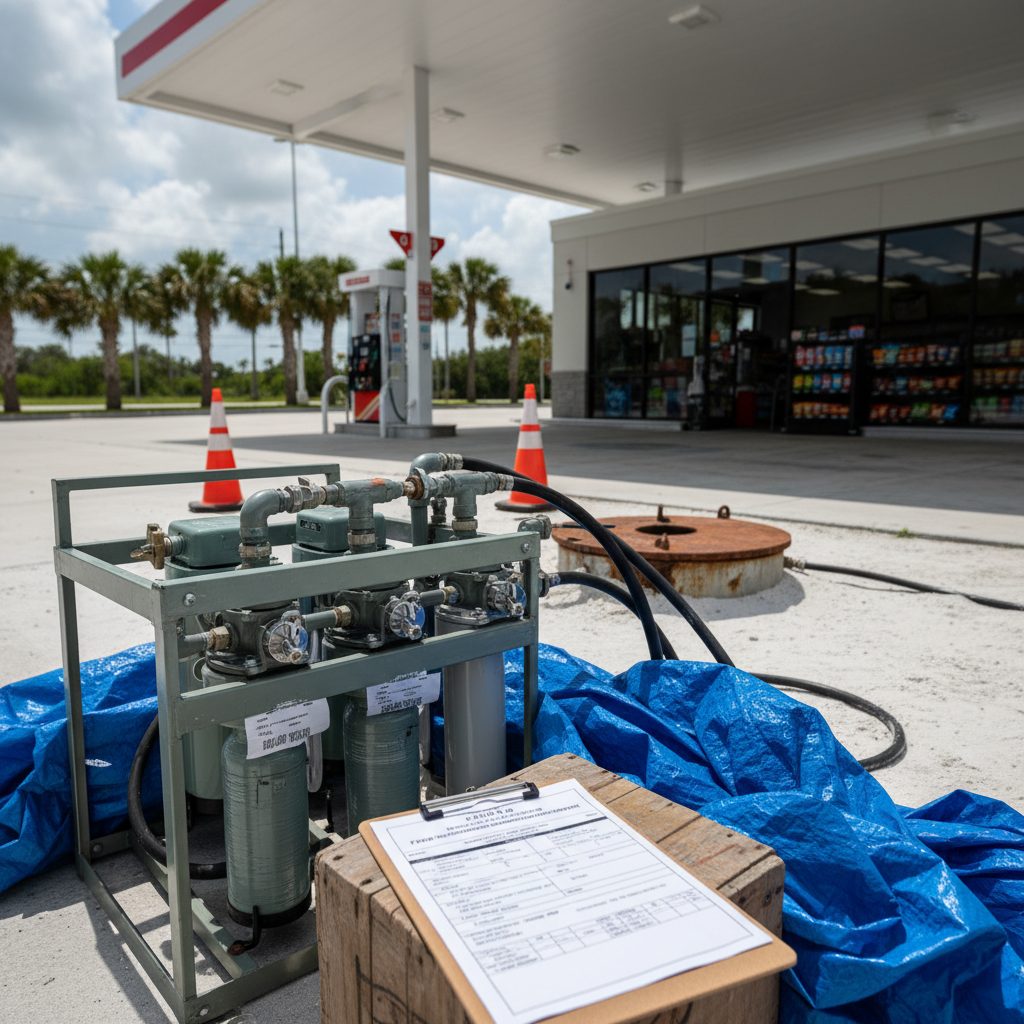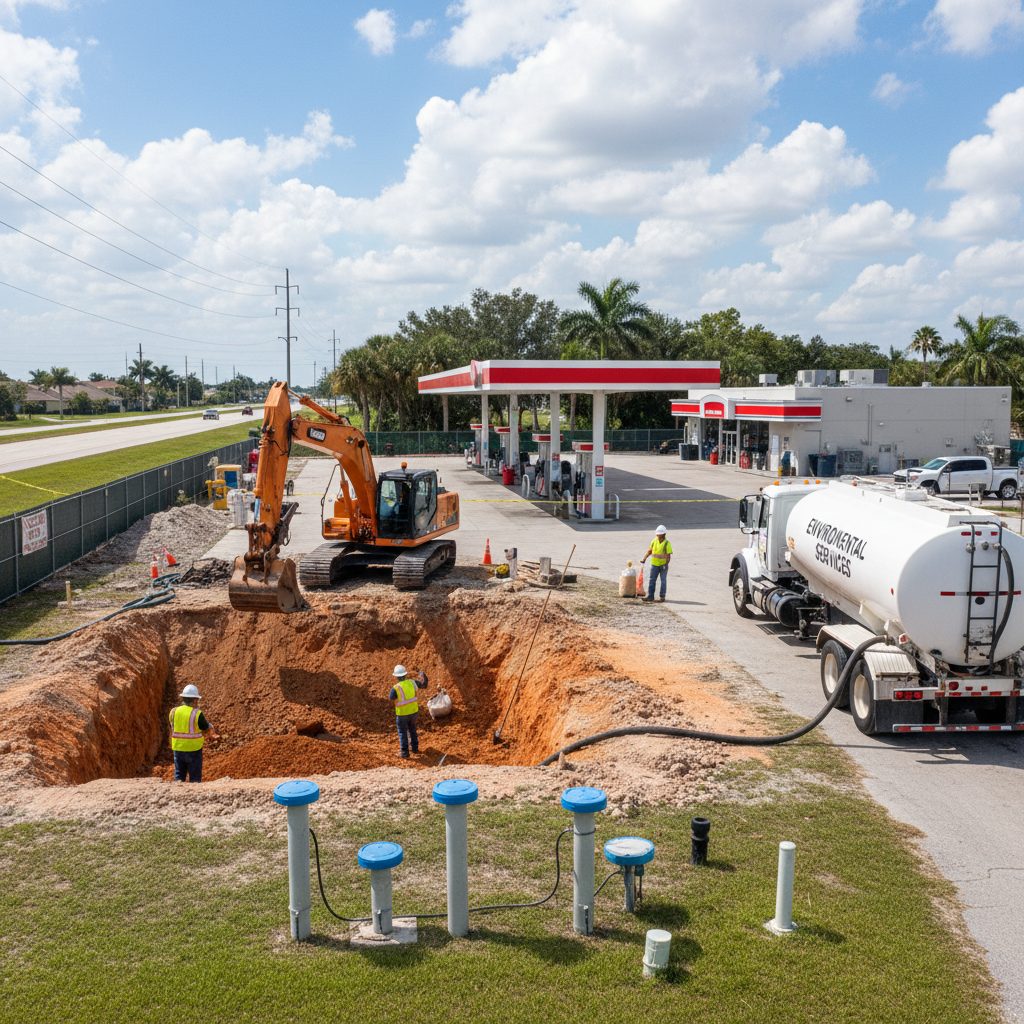
Environmental remediation at Florida gas stations — overseen by the Florida Department of Environmental Protection's Storage Tank and Petroleum Program — is one of the most consequential variables in any Florida fuel-retail transaction, whether you are buying, selling, or refinancing. An open FDEP discharge case is not inherently a deal-killer, but it requires a structured understanding of program mechanics, cost exposure, and how to allocate remediation obligations in a closing that protects all parties.
Florida gas station buyers and sellers who approach open-case transactions without this understanding routinely either abandon viable deals unnecessarily or close into unquantified remediation liability that emerges post-closing. The Gas Station Group's transaction advisory process addresses FDEP environmental status at the outset of every Florida fuel-retail engagement.
Open Discharge Cases: Types and FDEP Program Framework
FDEP discharge cases arise from confirmed petroleum product releases from USTs or associated piping and dispensers. Cases are classified by discharge characteristics: Early Detection Incentive (EDI) cases, where the release was self-reported by the operator before FDEP detection; non-EDI cases, where the release was detected by FDEP inspection, third-party complaint, or water-supply monitoring; and mixed cases involving both voluntary and regulatory detection components. EDI classification provides significant cost advantages — reduced co-pay obligations and priority remediation funding — making early self-reporting a critical risk-management decision for Florida operators.
FDEP maintains an online discharge database — the Cleanup Site Information database — that is publicly accessible and reviewed by every competent Florida gas station buyer, lender, and title insurer as a standard due diligence step. A site's discharge case history, current cleanup status, and responsible party designation are all visible in this database. Sellers should review their own FDEP records before going to market to understand what buyers will find and to prepare accurate disclosure representations.
EDI Program Mechanics and IPTF Eligibility
The Early Detection Incentive program rewards operators who voluntarily report petroleum releases to FDEP within specified timeframes — before contamination reaches potable water supplies, property boundaries, or regulatory detection thresholds. EDI-qualified sites receive a reduced co-pay obligation and access to IPTF funding for remediation costs exceeding the co-pay threshold. The IPTF co-pay for EDI sites historically ranged from $10,000 to $50,000 depending on discharge volume and site classification; non-EDI cases carry substantially higher co-pay obligations, often $100,000-plus, plus potential penalty exposure.
IPTF eligibility requires the responsible party to maintain current UST registration, current certified operator designations, and compliance with FDEP reporting requirements throughout the remediation period. Loss of IPTF eligibility — triggered by registration lapses, certified operator designation gaps, or failure to submit required progress reports — converts state-funded remediation to full responsible-party liability, a consequence that can represent hundreds of thousands of dollars in direct cost exposure for complex contamination cases.
NFA Letters: Process and Significance
A No Further Action (NFA) letter from FDEP is the definitive regulatory closure document for a Florida petroleum discharge case — it represents FDEP's determination that contamination has been remediated to applicable cleanup target levels or that natural attenuation will achieve compliance within an acceptable timeframe. NFA letters are transferable with the property, providing subsequent owners, lenders, and title insurers with regulatory closure documentation that does not create ongoing liability disclosure obligations.
Obtaining an NFA letter requires completion of all required remediation activities, submission of a site assessment report documenting cleanup to applicable target levels, and FDEP review and approval — a process that can take 12–36 months from remediation completion depending on FDEP district workload and site complexity. For Florida gas station sellers, a site with an NFA letter in hand commands meaningfully higher pricing and eliminates the deal-structure complexity associated with open-case transactions. Sellers with near-complete remediation sites should evaluate whether delaying sale to obtain NFA closure produces a net-positive return on holding costs.
Closing Structure When Remediation Is Ongoing
When a Florida gas station closes with an active FDEP discharge case, the transaction requires deliberate allocation of remediation responsibility through the purchase agreement and closing documents. Four common structures are used: (1) seller retention of the FDEP responsible-party designation with indemnification of the buyer for all remediation costs; (2) buyer assumption of the discharge case with a purchase price reduction reflecting the estimated remediation liability; (3) remediation escrow — funded at closing from sale proceeds — with a third-party administrator managing FDEP contractor oversight and reimbursement; and (4) environmental insurance covering post-closing cost overruns above the base estimate.
Florida title insurance for open-case transactions requires endorsement for known environmental conditions — not all title underwriters will issue this coverage, and those that do require FDEP case documentation, remediation cost estimates from a licensed PRCP, and legal structure review. Buyer lenders — particularly SBA 7(a) lenders — will require the remediation structure to be reflected in the loan commitment documents, with escrow mechanics that satisfy the lender's collateral protection requirements. The Gas Station Group coordinates environmental counsel, lender requirements, and FDEP case management into a unified closing framework for Florida transactions involving open discharge cases. Call Bobby Berrido at (305) 518-1545 to discuss your specific situation.
Frequently Asked Questions
Speak With a Florida Gas Station Specialist
Request a confidential consultation or off-market opportunities and pricing through our contact page, or call +1-305-518-1545. The Gas Station Group is headquartered at 8603 S Dixie Hwy, Miami, FL 33143. Principal: Bobby Berrido.
Continue Reading