Environmental regulation is the defining risk in Florida fuel retail. The Florida Department of Environmental Protection and delegated county programs govern storage tanks, discharge reporting, and cleanup, and those rules shape purchase price, financing, and insurance on every deal.
This guide summarizes the environmental regulations that affect owning or buying a fueling station in Florida and how each one shows up in a transaction. For the diligence mechanics, see our UST and Phase I guide.
Storage Tank Rules and Ongoing Compliance
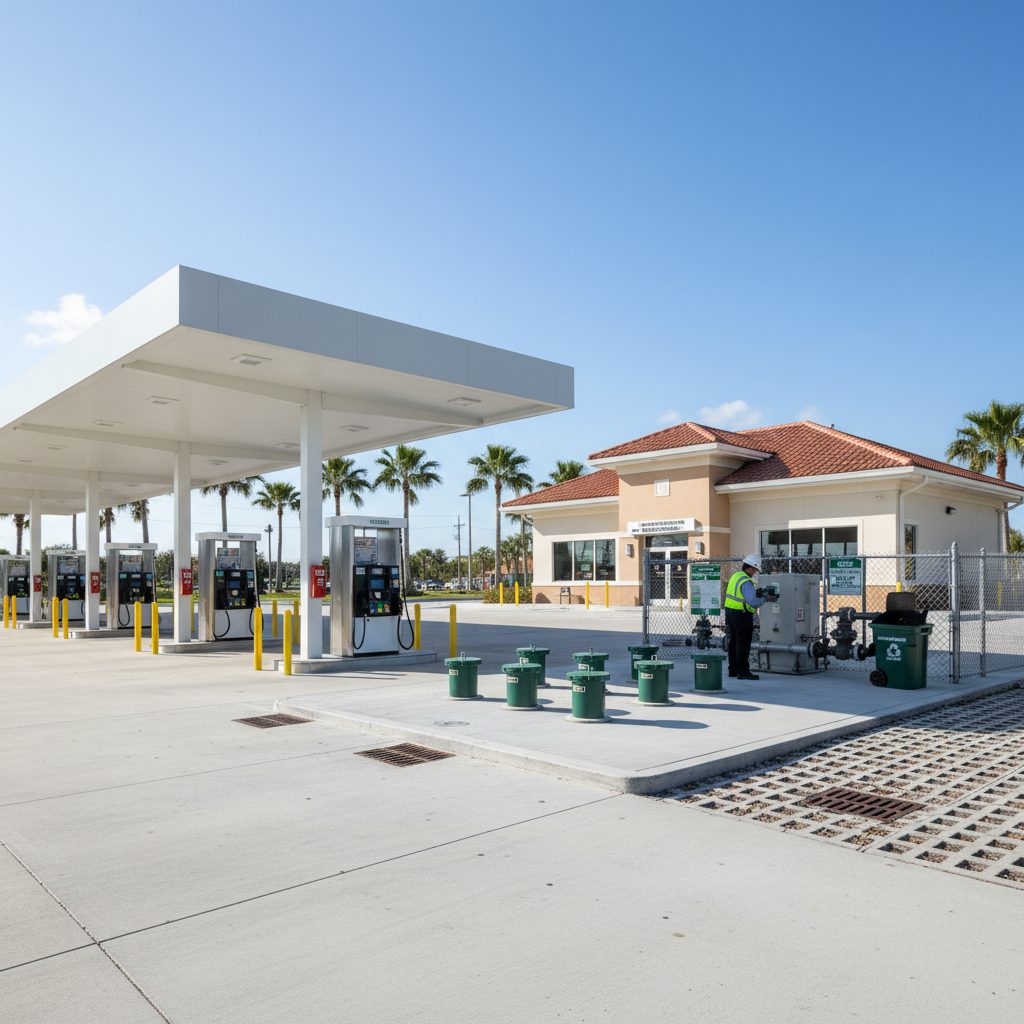
Florida regulates underground and aboveground storage tank systems under FDEP rules implemented largely through delegated county programs. Requirements include registration of every regulated tank, secondary containment, release detection, monthly monitoring and inventory reconciliation, periodic integrity and line testing, cathodic protection inspection for steel systems, spill and overfill prevention, and operator training.
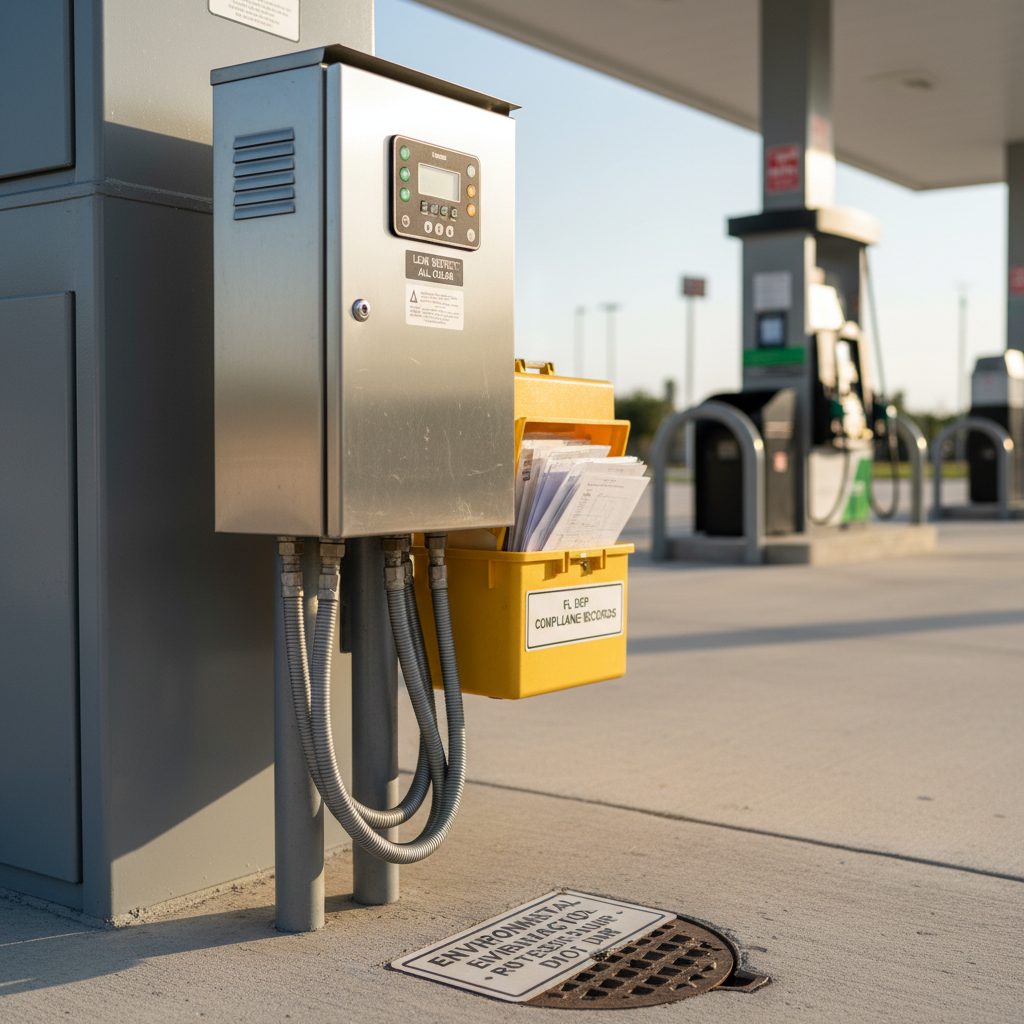
Records are as important as hardware. A site with compliant equipment but missing monitoring records still fails inspection, and a documented compliance history is one of the first things a lender's environmental consultant reviews.
Discharge Reporting, Cleanup, and State Programs
Discovered releases must be reported promptly, followed by site assessment and, where warranted, remediation under FDEP oversight. Florida operates petroleum cleanup funding programs that can shift eligible cleanup costs to the state based on discharge date and reporting compliance — eligibility is site-specific and can be lost through late reporting or improper handling.
For buyers, the key question is not whether a site has history but whether that history is reported, characterized, and enrolled. A known, funded case is often financeable; an undocumented one usually is not.
Liability, Insurance, and Deal Structure
Florida requires financial responsibility for tank systems, commonly satisfied through pollution liability coverage. Buyers should also consider environmental indemnities, escrow holdbacks, baseline sampling at closing to fix the liability line, and confirmation that program eligibility survives the transfer.
Structure protects you where diligence cannot. Where assessment is incomplete, negotiate a defined scope, a cost cap, and a walk-away right rather than accepting a general representation from the seller. We build these protections into contracts as part of buyer representation.
Frequently Asked Questions
Speak With a Florida Gas Station Specialist
Request a confidential consultation or off-market opportunities and pricing through our contact page, or call +1-305-518-1545. The Gas Station Group is headquartered at 8603 S Dixie Hwy, Miami, FL 33143. Principal: Bobby Berrido.
Continue Reading