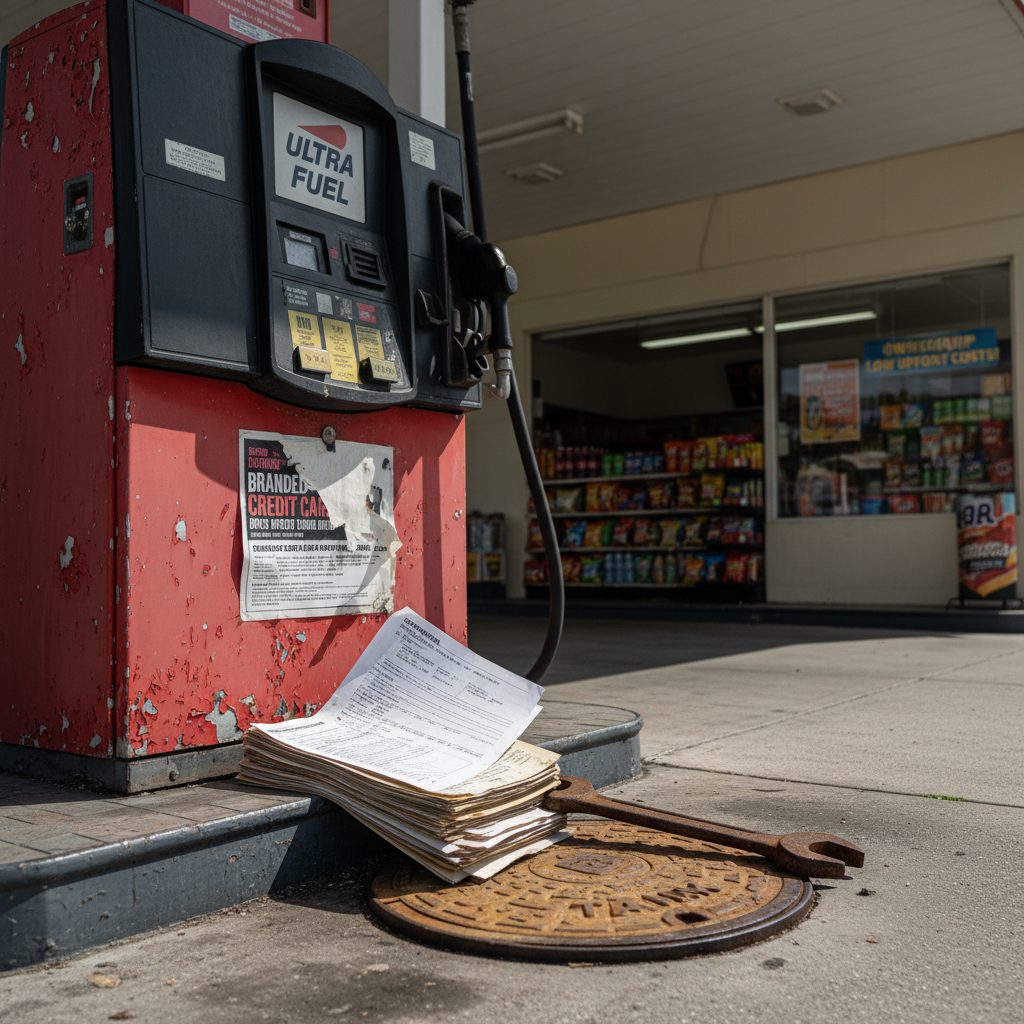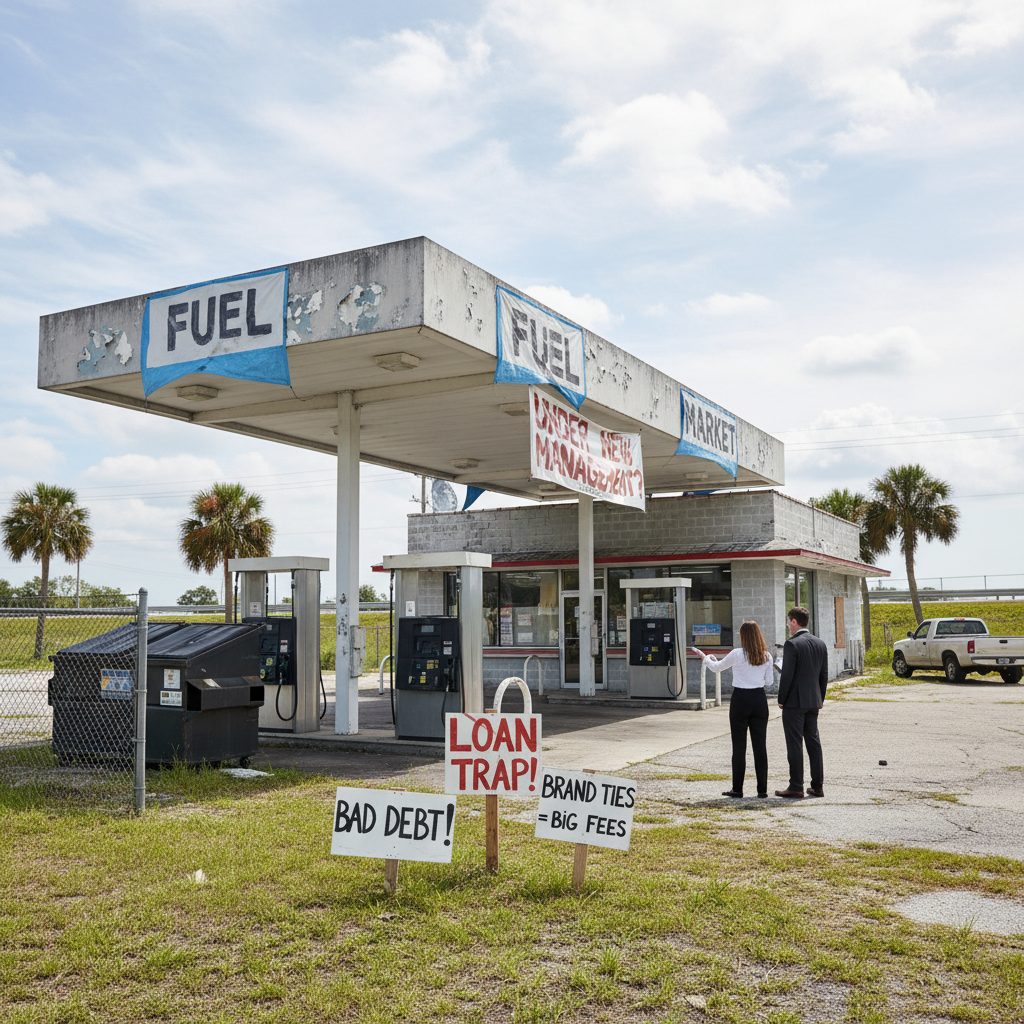
When a major oil company or branded jobber offers to fund a canopy replacement, dispenser upgrade, or full-site reimage, the offer can look generous on the surface. In practice, brand image loans are one of the most consequential and least understood obligations in fuel retail, and they can quietly destroy the economics of a sale, a refinance, or a supply agreement renegotiation.
The Gas Station Group has reviewed hundreds of Florida supply agreements and seen firsthand how image loan terms — buried in exhibits and schedules — surface at the worst possible moment: at a closing table, during a lender's due diligence review, or when a buyer discovers they cannot freely assign the agreement. Understanding the anatomy of these instruments before you sign — or before you acquire a site — is non-negotiable.
Amortization Structure and Volume Covenants
Brand image loans are typically structured as amortizing forgivable loans, not grants. The supplier forgives a pro-rata share of the principal each year the dealer meets minimum volume purchase thresholds — commonly set at 85–100% of contracted annual gallonage. If volume falls short, the dealer may be required to repay the unforgiven balance in cash at year-end or carry a running deficit that compounds into subsequent periods. On a $200,000 image loan spread over a 10-year supply agreement at a Florida high-volume site, the annual forgiveness can be $20,000 — but only if every volume covenant is met.
Volume covenants are calibrated to the site's historical throughput, but suppliers routinely set targets at or above historical averages to create covenant tension. A site on a Florida Turnpike interchange that processes 150,000 gallons per month in normal conditions may have a covenant set at 145,000 — achievable in peak summer travel season but difficult during hurricane evacuation disruptions or seasonal lull periods. Buyers who inherit these structures without scrutinizing covenant levels are accepting hidden performance risk.
Accelerated Repayment Triggers
The most dangerous provisions in a brand image loan are the accelerated repayment triggers. Standard language in major oil company agreements provides that the entire unforgiven principal balance becomes immediately due and payable upon: early termination of the supply agreement by the dealer, a material breach of the PMPA or franchise agreement, or — critically — a change of ownership or control of the site. This last trigger is where Florida gas station transactions most frequently collapse.
A buyer who acquires a site without verifying the image loan balance and its transfer terms may discover at closing that the seller owes $180,000 to the supplier, payable on assignment. Unless that liability is negotiated into the purchase price or resolved with the supplier prior to close, the transaction either fails or the buyer unknowingly absorbs the obligation. Fuel supply agreement advisory conducted pre-LOI — not post-contract — is the only way to surface these triggers before they become deal-breakers.
Forgiveness Scheduling and Transfer-on-Sale Rules
Forgiveness schedules are not always linear. Some agreements front-load forgiveness in the early years to incentivize compliance and back-load risk in the final years when the dealer's switching cost is lower. Others are purely straight-line. In either case, buyers must request the complete forgiveness schedule, the current outstanding balance, and the trailing 24-month volume record to assess whether the site is on track to achieve full forgiveness or whether the seller is carrying an accelerating deficit.
Transfer-on-sale rules vary dramatically by brand. Some major oil companies will assign the existing image loan to a qualified new dealer with no acceleration, provided the buyer assumes the remaining supply agreement term. Others require full repayment upon any change of control, full stop. Jobber-administered branded agreements — common under Sunoco, Marathon, or Citgo flags in Florida — often have more negotiable transfer terms than direct major oil company agreements, which is one reason unbranded or jobber-branded sites can be structurally cleaner acquisitions.
What Buyers Must Do Before Signing
Every Florida gas station buyer should make production of the complete supply agreement — including all exhibits, addenda, and the image loan schedule — a condition of the LOI, not the purchase agreement. Review must cover: the current unforgiven balance, the forgiveness schedule going forward, volume covenant levels versus trailing actual gallonage, and the explicit language governing change-of-control acceleration. If the seller cannot produce a complete agreement, that is a material red flag requiring resolution before any earnest money changes hands.
Beyond the paper review, buyers should engage directly with the supplier's dealer development or transfer desk early in the process. Suppliers have an economic interest in retaining a qualified operator at the site and will often negotiate accommodation — including assignment of the image loan, partial forgiveness acceleration, or a fresh supply agreement at market terms — if approached professionally and early. A specialist broker with Florida fuel retail experience is the right intermediary for that conversation. Florida gas station buyers and sellers who work with experienced fuel retail advisors close these transactions with far fewer last-minute surprises.
Frequently Asked Questions
Speak With a Florida Gas Station Specialist
Request a confidential consultation or off-market opportunities and pricing through our contact page, or call +1-305-518-1545. The Gas Station Group is headquartered at 8603 S Dixie Hwy, Miami, FL 33143. Principal: Bobby Berrido.
Continue Reading