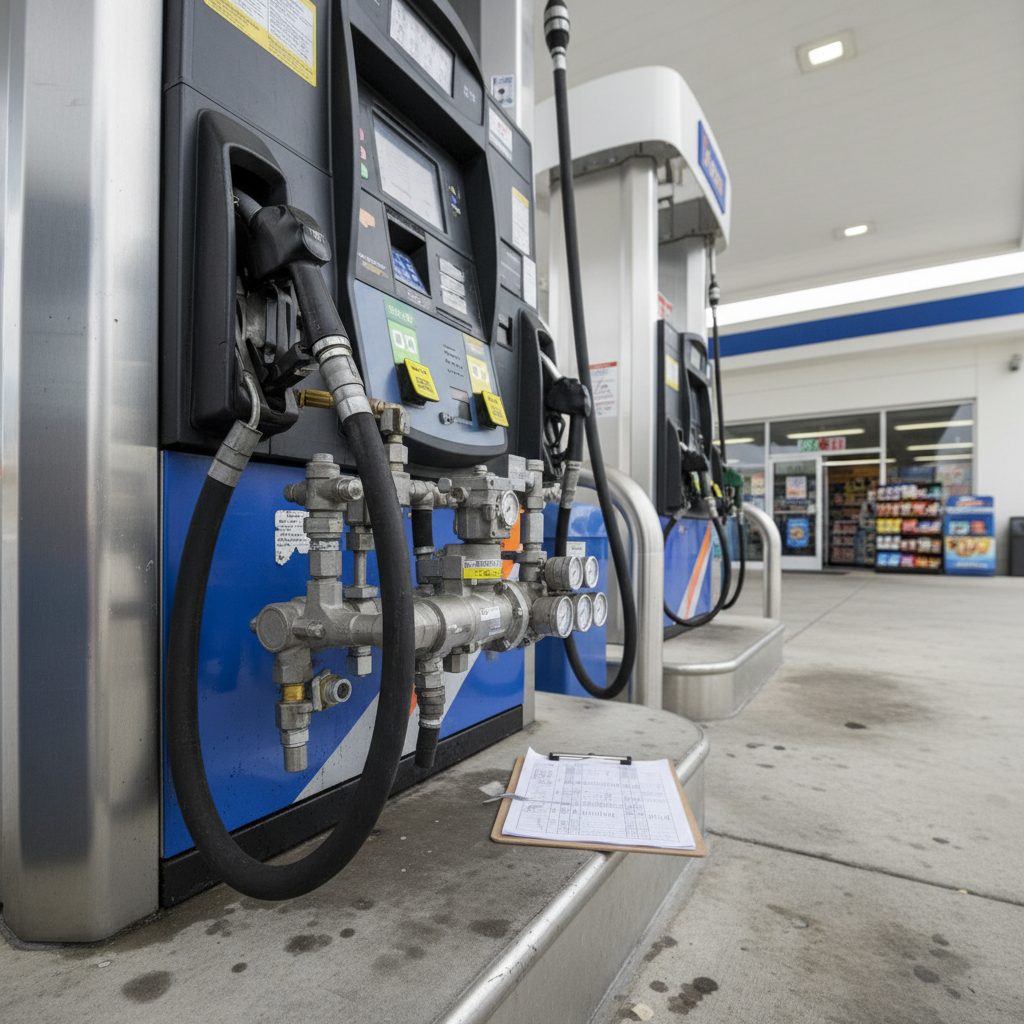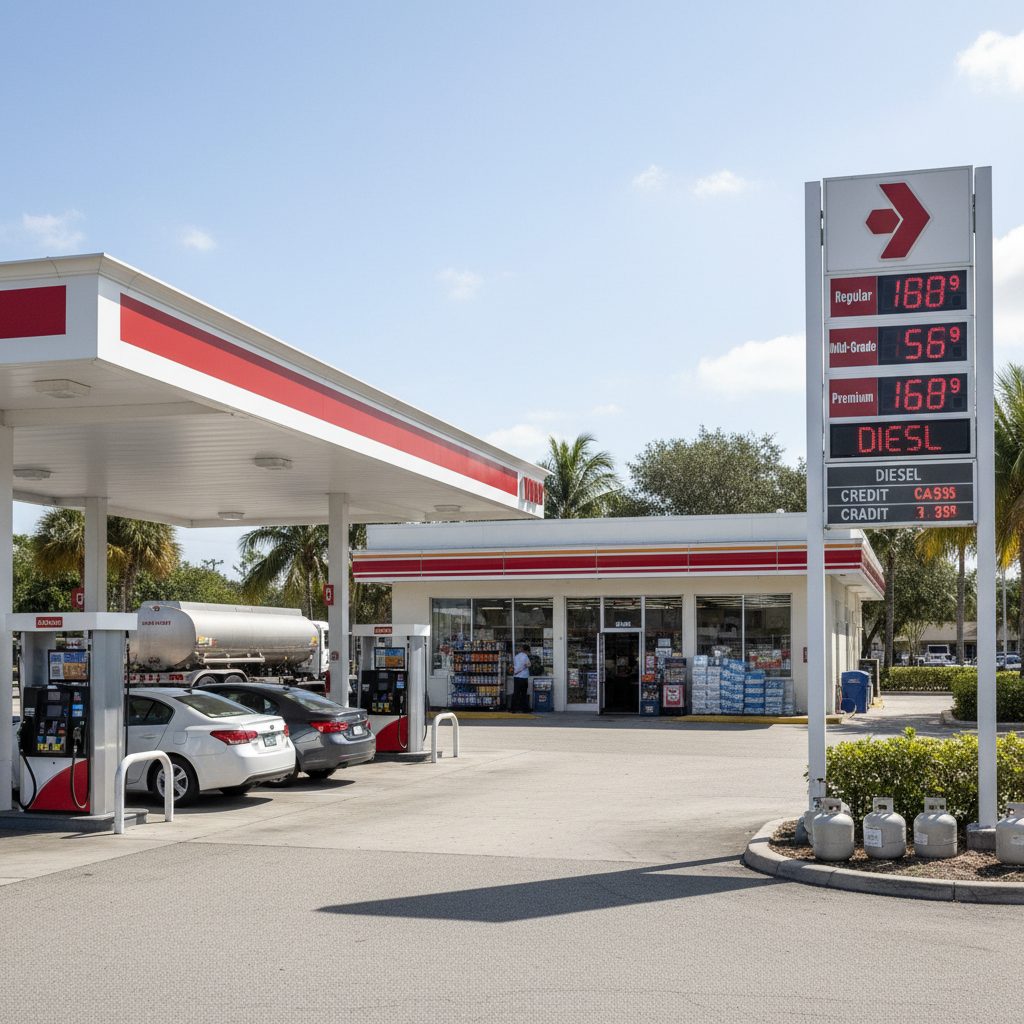
Fuel margin is the single most scrutinized line item when underwriting a Florida gas station, yet it remains one of the most misunderstood. Between rack price fluctuations at Port Everglades, the complexity of state and federal tax stacking, and the silent drag of credit card interchange, operators who do not model their margin stack precisely are routinely surprised at month-end.
The Gas Station Group works with buyers, sellers, and operators across Florida's I-95, I-75, and Turnpike corridors, and margin literacy is foundational to every deal we close. Understanding how cents-per-gallon (CPG) is assembled — and eroded — is not optional for anyone serious about fuel retail in this state.
Rack Price, Freight, and the True Cost of Fuel
The rack price is the wholesale price a supplier or jobber charges at the terminal — in Florida, the primary terminals sit in Tampa, Jacksonville, and Port Everglades in Fort Lauderdale. This price resets daily, sometimes intraday on volatile sessions, and operators locked into a posted-rack contract absorb every move. Freight from the terminal to the site adds between 1.5 and 4 CPG depending on haul distance and truck load size, making rural sites on the I-10 corridor structurally more expensive to supply than sites inside the Miami or Orlando metro rings.
Savvy operators negotiate supply agreements with fixed differentials above the OPIS rack average or use index-based pricing to smooth volatility. Without a well-structured supply agreement, a site on US-1 in South Florida can carry a landed cost 6–8 CPG higher than a volume-competitive site in the same market. Fuel supply agreement advisory is a specialized discipline that most general brokers and operators overlook until margin compression forces the conversation.
State and Federal Tax Stacking in Florida
Florida's fuel tax structure is layered and often surprises buyers new to the state. At the federal level, gasoline carries an 18.4 CPG excise tax and diesel carries 24.4 CPG. On top of that, Florida levies a motor fuel tax, a state comprehensive enhanced transportation inspection fee, a state-administered county fuel tax, and — in most of Florida's 67 counties — a locally imposed ninth-cent or local option fuel tax. The blended state-plus-local total typically lands between 36 and 44 CPG depending on county.
These taxes are paid by the distributor and embedded in the rack price the dealer receives, but they are critical for two reasons: they create a floor on street pricing discipline, and they are a major factor in cross-state competitive dynamics near the Georgia and Alabama borders along I-75 and I-10. Operators near state lines must be aware that neighboring state tax burdens affect cross-border price shopping and volume at their pumps.
Credit Card Fees and the Spread That Disappears
Credit card interchange is one of the most corrosive forces on net fuel margin and one of the least visible to first-time buyers. Because interchange is calculated as a percentage of the total transaction — not a flat CPG fee — high street prices create a compounding drag. At $3.50/gallon and a blended interchange rate of approximately 1.8–2.2%, a dealer surrenders roughly 6.3–7.7 CPG on every credit transaction. At a site processing 80,000 gallons monthly with 70% card penetration, that translates to $3,500–$4,300 per month in interchange alone.
Cash-discount and dual-pricing programs have become increasingly common at unbranded sites across Florida, particularly in price-sensitive markets along the I-95 corridor from Miami to Fort Lauderdale. Branded operators face restrictions from their supply agreements that limit pricing flexibility, making credit card fee management an especially important differentiator for unbranded independents.
Branded vs. Unbranded Margin and Weekly Volatility
Branded dealers — flying Chevron, Shell, BP, or Sunoco flags under major oil company or branded jobber agreements — typically receive a modest branding subsidy and benefit from loyalty program traffic, but they cede pricing flexibility and must operate within supply-agreement guardrails. Unbranded or open-dealer sites can buy opportunistically from multiple jobbers, capture wider street-price spreads when rack markets are weak, and are not subject to image-program capital requirements. In Florida's hypercompetitive metro markets, unbranded CPG margins can run 2–5 CPG higher than branded equivalents when supply is loose.
Weekly volatility is real: a site can swing from a 12 CPG gross margin week to a 4 CPG gross margin week simply based on rack movement and local competitive response. Operators who track OPIS daily, maintain strong jobber relationships, and use structured supply advisory services are best positioned to defend margin floors. When underwriting a Florida station for acquisition, buyers should demand at minimum 12 months of daily rack invoices and reconcile them against POS gallonage reports before closing.
Frequently Asked Questions
Speak With a Florida Gas Station Specialist
Request a confidential consultation or off-market opportunities and pricing through our contact page, or call +1-305-518-1545. The Gas Station Group is headquartered at 8603 S Dixie Hwy, Miami, FL 33143. Principal: Bobby Berrido.
Continue Reading