Florida's truck stop and high-flow diesel real estate sits at the intersection of three durable demand drivers: massive port logistics (PortMiami, Port Everglades, Port of Palm Beach), interstate freight movement along I-95, I-75, and Florida's Turnpike, and the unique single-corridor geography of US-1 through the Florida Keys. For investors and operators evaluating the asset class, understanding where freight actually moves — and where it stops to fuel — is the entire game.
What Makes a Site a Truck Stop
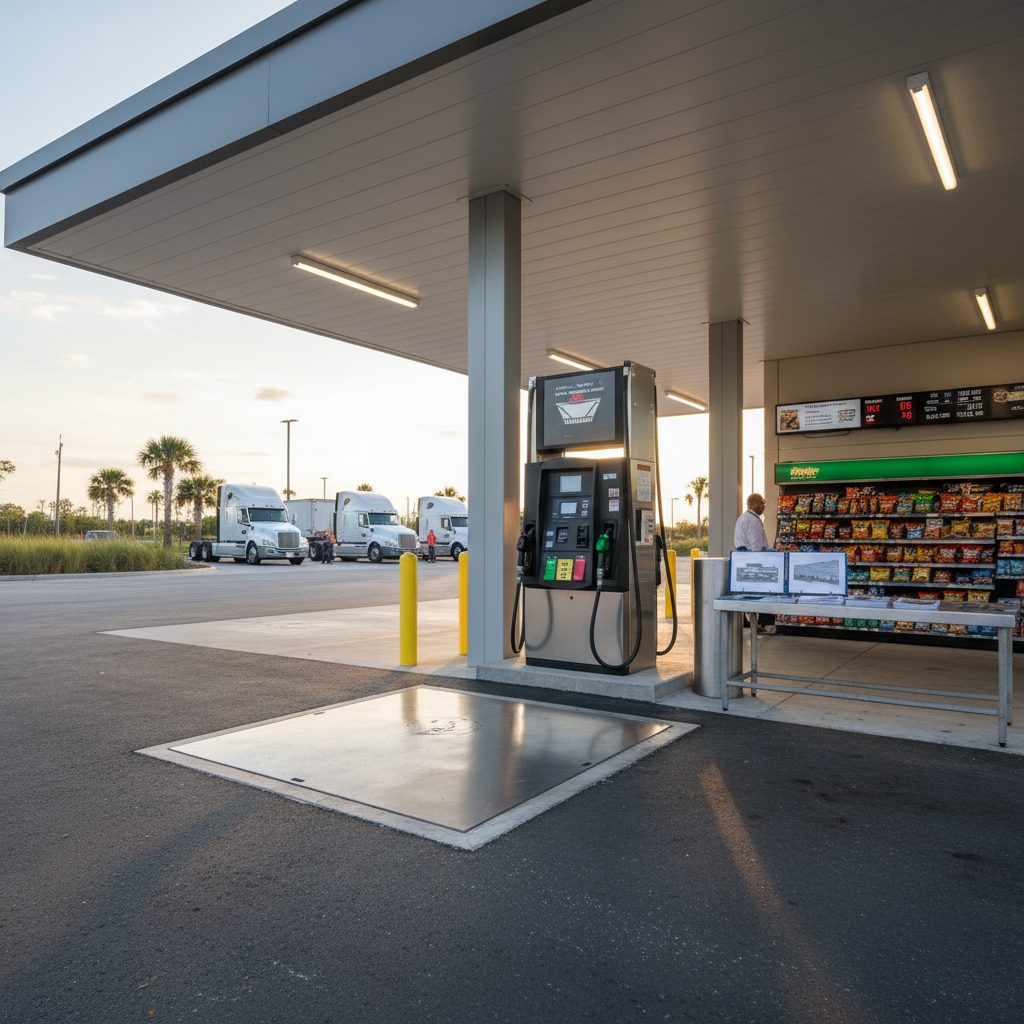
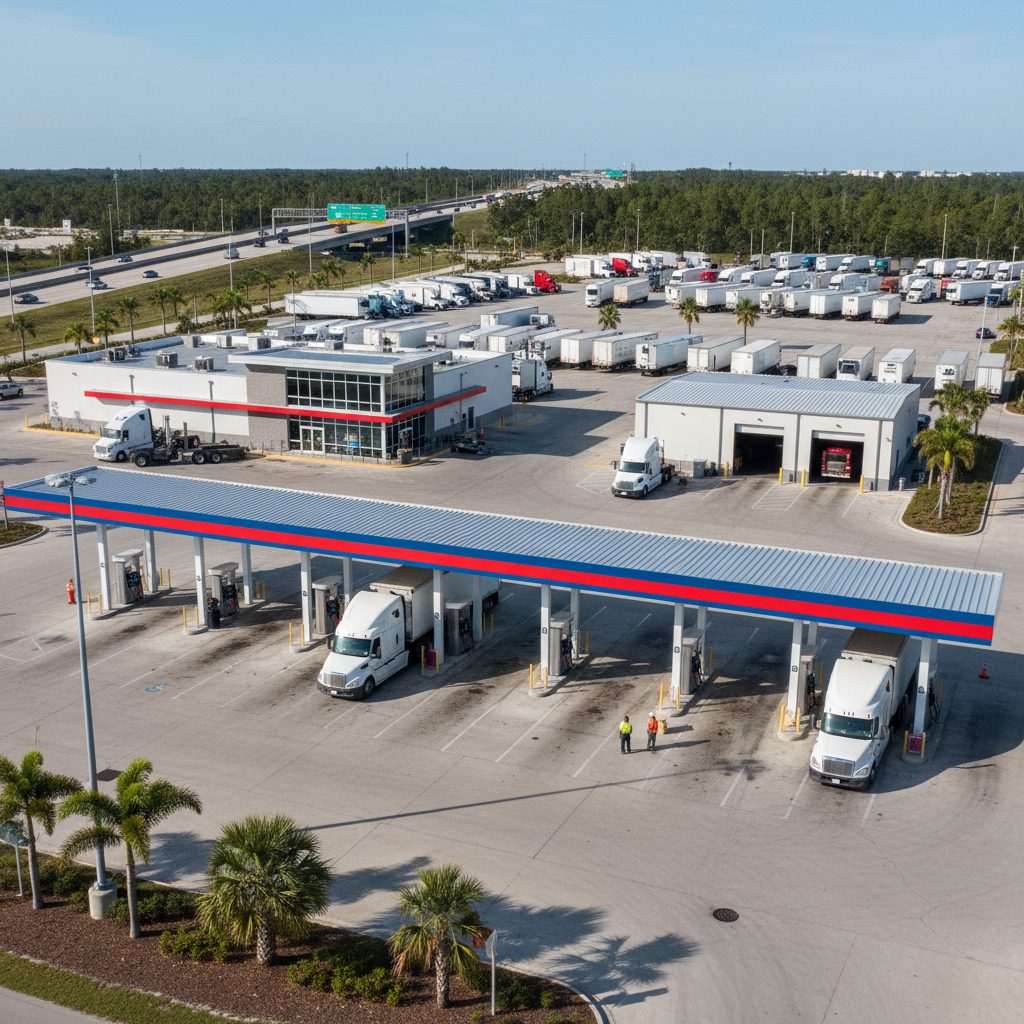
A true truck stop is more than a station that sells diesel. The site needs ingress and egress capable of accommodating Class 8 tractors, dedicated high-flow diesel pumps, oversized canopies, on-site parking for rest hours, and ideally amenities like showers, scales, and full-service food. Many "diesel stations" in Florida sell diesel as a secondary product to passenger vehicles and light-duty trucks; those are valuable assets, but they trade on retail station fundamentals, not truck stop fundamentals.
The Florida Freight Map
Drayage out of PortMiami and Port Everglades drives heavy short-haul diesel demand in southeastern Miami-Dade and central Broward. Long-haul freight moves north on I-95 and west on I-75 / Alligator Alley. Florida's Turnpike concentrates regional freight up the spine of Palm Beach County. US-1 through Monroe County serves a niche but essentially captive market — there is no alternative road to the Keys.
Underwriting Truck Stop Cash Flow
Truck stop economics differ meaningfully from retail station economics. Diesel margin per gallon is typically thinner than gasoline, but volume per pump is dramatically higher, and ancillary revenue (parking, showers, food, services) can rival fuel margin on the best sites. Inside sales mix skews toward food, beverages, and trucker-specific SKUs. Three years of detailed gallon and ancillary revenue history is the starting point for any underwriting model.
Investment Themes Worth Watching
Port expansion, e-commerce-driven freight growth, the long-term diesel-to-alternative-fuel transition, and the steady tightening of zoning for new truck-oriented sites are all shaping the asset class. Existing well-located truck stops with full entitlements are becoming progressively harder to replace — supporting cap rate compression on the best sites.
Explore the Market
View current truck stops for sale across Florida, or learn more about our institutional investment sales practice. Submit acquisition criteria to access off-market opportunities.