The terms 'truck stop' and 'travel center' are used interchangeably in casual conversation but represent meaningfully different asset classes in Florida fuel retail — different in diesel volume thresholds, real estate footprint, amenity mix, branded operator presence, and investor cap-rate profile. For buyers, sellers, and investors evaluating large-format fuel retail in Florida, understanding the distinction is essential to correct underwriting.
The Gas Station Group evaluates large-format fuel retail across Florida's major interstate corridors — I-95, I-75, I-10, and the Florida Turnpike — and regularly advises buyers and sellers of both independent truck stops and nationally branded travel center sites. The market for these assets is deep, institutional, and specialized, and it rewards those who understand the operational and real estate differences between the two formats.
Diesel Volume Thresholds and Parking Capacity
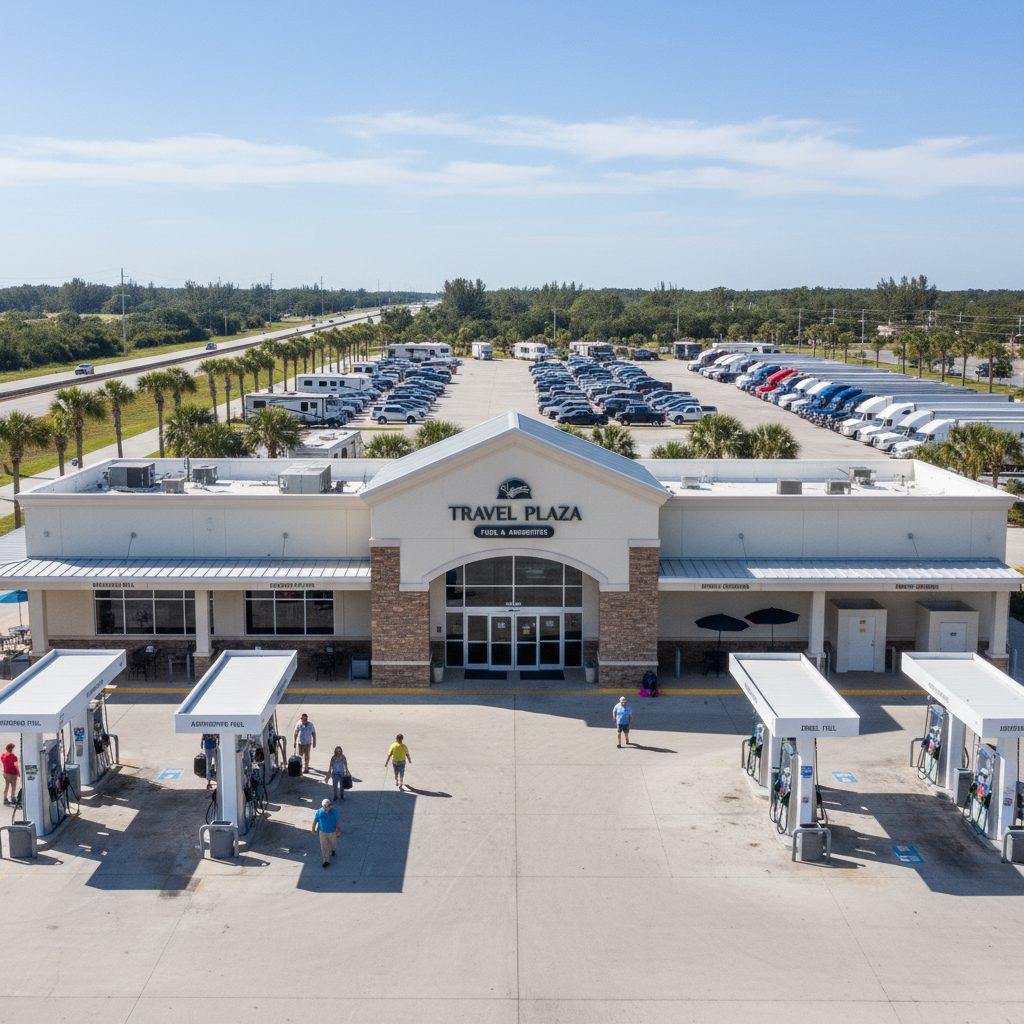
The fundamental operational distinction between a truck stop and a travel center begins with diesel volume and truck parking capacity. A traditional Florida truck stop typically processes 50,000–150,000 gallons of diesel per month, with 20–50 truck parking spaces and a limited amenity package. A travel center — typified by national brands like Pilot Flying J, TravelCenters of America (TA), and Love's — is a high-throughput operation processing 500,000–1,500,000+ gallons of diesel monthly, with 100–300+ truck parking spaces and a full-service amenity campus.
Parking capacity directly drives diesel volume: professional over-the-road truckers choose fueling locations based on available overnight parking, DEF availability, and proximity to their route schedule. Florida's I-75 corridor from Fort Lauderdale to Gainesville, and the I-10 Panhandle corridor from Tallahassee to Pensacola, are the primary OTR truck routes where travel center operators compete fiercely for parking share. A site that maxes out at 40 truck spaces cannot compete for the institutional fuel volume that makes travel center economics work.
Amenity Mix: Showers, Restaurants, Scales, and Services
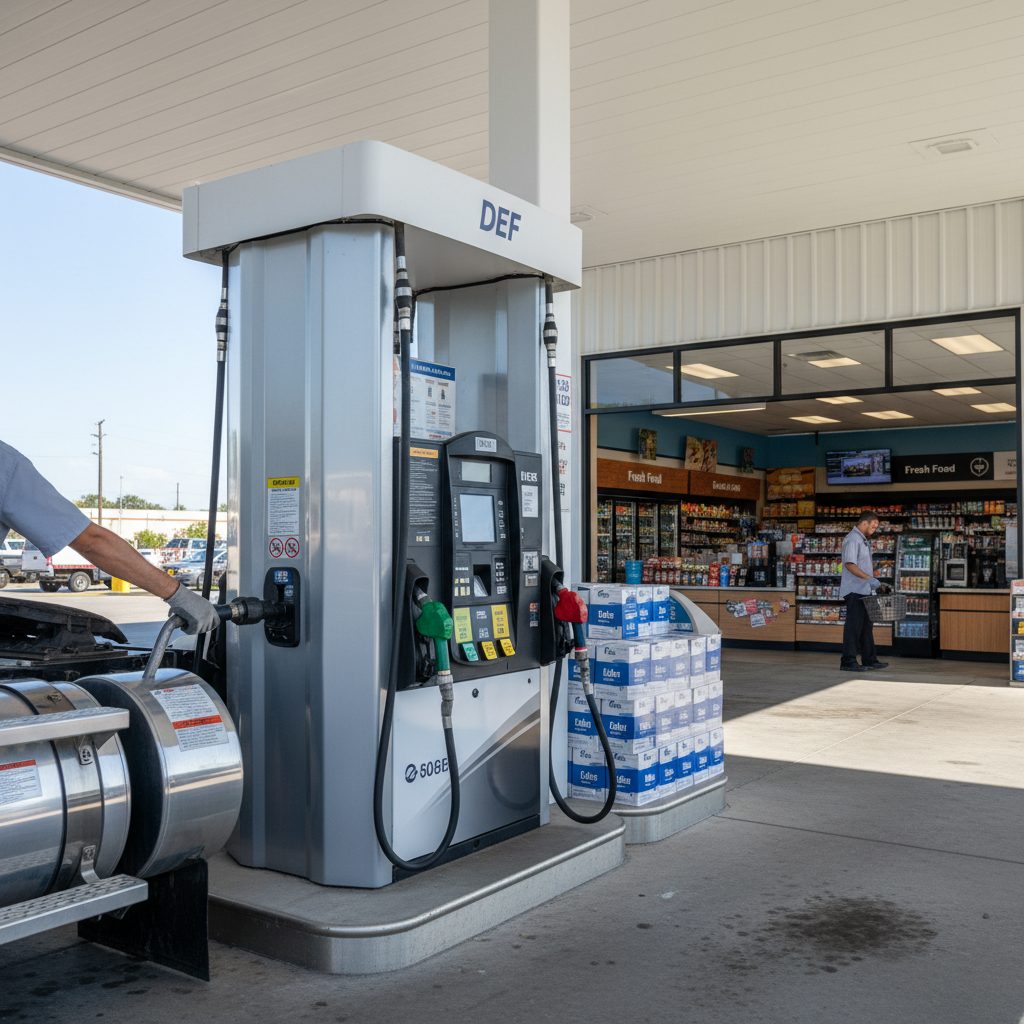
The amenity gap between a truck stop and a travel center is substantial. A Florida independent truck stop may offer a diner or quick-serve restaurant, a small driver's lounge, and fuel. A full-service travel center on a Pilot Flying J or TA flag offers: private showers (20–60 stalls), multiple branded QSR restaurants, a large retail c-store, certified CAT scales, truck service bays, DEF in bulk and at the pump, laundry facilities, a driver's lounge with Wi-Fi, and increasingly, EV truck charging infrastructure.
These amenities are not merely customer conveniences — they are volume drivers that create lock-in among professional drivers and fleet operators. A trucking company that has negotiated a fuel network agreement with Pilot Flying J directs its drivers to Pilot locations specifically, creating captive institutional diesel volume that an independent truck stop simply cannot replicate. This amenity gap is the primary reason nationally branded travel centers command a significant cap-rate premium over independent truck stops when they trade in the investment market.
Branded Operators vs. Independent: The Competitive Landscape
Florida's travel center market is dominated by three national platforms: Pilot Flying J (owned by Berkshire Hathaway), TravelCenters of America (owned by BP), and Love's Travel Stops (privately held). These operators control the majority of high-throughput truck fueling locations at Florida's major interstate interchanges — including critical nodes at I-75/Alligator Alley, I-95/SR-60, and multiple I-10 Panhandle interchanges. Their network agreements with major trucking fleets create a structural advantage over independent operators that is difficult to overcome without equivalent scale.
Independent truck stops in Florida tend to compete on price, location convenience for regional rather than OTR routes, and personalized service. Many are family-owned operations that have operated at the same location for decades and carry strong local loyalty from regional carriers and owner-operators. These sites can be attractive acquisition targets for operators or investors who can professionalize management and potentially affiliate with a fuel brand — but their volume ceiling is materially lower than branded travel centers. Florida truck stops for sale span both categories, and correct underwriting requires understanding which competitive tier a given asset occupies.
Investor Cap-Rate Spread and Underwriting Differences
From an investment standpoint, branded travel centers on long NNN leases trade at the tightest cap rates in the fuel retail sector — typically 4.75–5.75% for Pilot, TA, or Love's NNN sale-leaseback transactions, driven by institutional credit tenants, long lease terms (15–20 years), and strong rent coverage ratios. These assets attract REIT buyers, 1031 exchange capital, and institutional private equity, and they command the most competitive bidding processes in Florida commercial real estate.
Independent truck stops trade at materially wider cap rates — typically 6.5–8.5% — reflecting operator-dependent income, shorter effective lease terms, and higher management intensity. Buyers of independent truck stops are typically regional operators, family offices, or private investors seeking yield and value-add upside through operational improvement or brand affiliation. The underwriting must account for diesel margin compression risk, fleet network contract expiration, and the real cost of deferred maintenance on aging truck service infrastructure. Florida gas station investment sale specialists can provide market-level cap rate guidance for both asset categories.
Frequently Asked Questions
Speak With a Florida Gas Station Specialist
Request a confidential consultation or off-market opportunities and pricing through our contact page, or call +1-305-518-1545. The Gas Station Group is headquartered at 8603 S Dixie Hwy, Miami, FL 33143. Principal: Bobby Berrido.
Continue Reading